Category: Gluten-Free Living

  • How to Tell if a Protein Bar Is Actually a Good Choice

    How to Tell if a Protein Bar Is Actually a Good Choice

    Protein bars can be tricky.

    Some look healthy.
    Others taste like dessert.
    And honestly, a few are basically candy bars wearing a wellness outfit.

    I am not here to shame any of it.

    As a woman over 50, a grandma, and someone who cares about health without making food my whole personality, I want simple. I want something I can grab at work, keep in my bag, or have with black coffee and water when life is moving fast.

    But I also want to know this:

    Is this protein bar actually helping me, or is it just a treat with the word protein on the wrapper?

    Let’s make it simple.

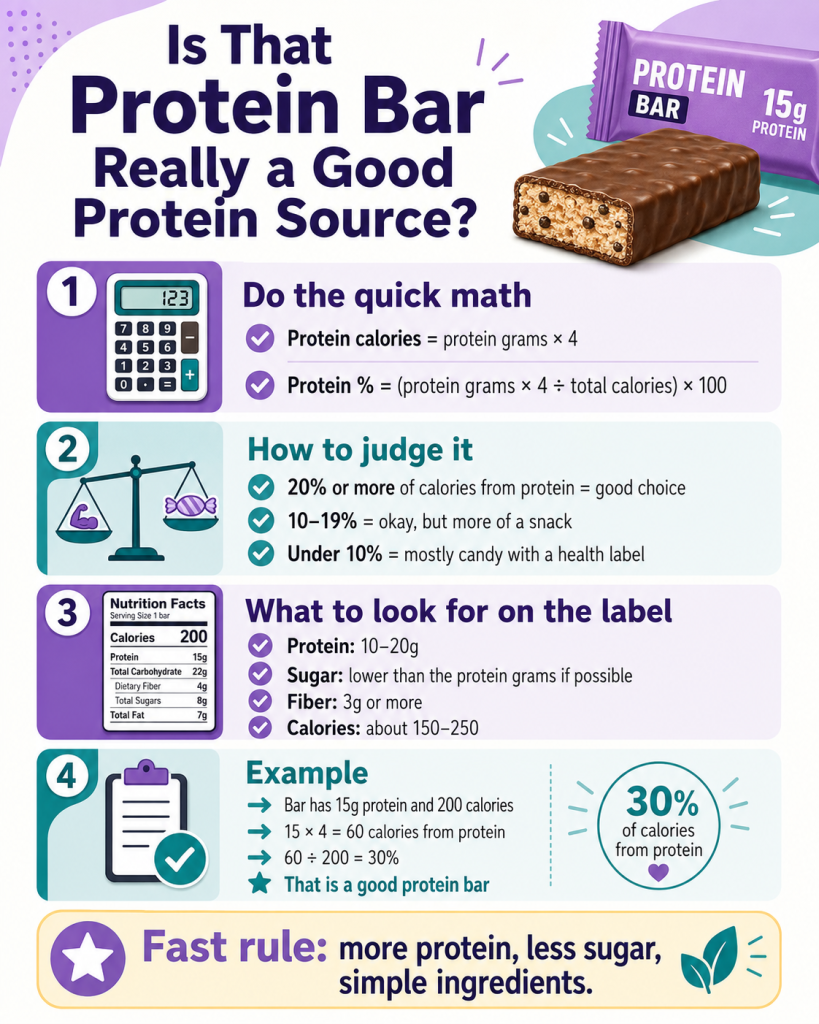
    Start With the Protein Math

    Here is the quick way to know if a protein bar is truly a good source of protein.

    Every gram of protein has about 4 calories.

    So you take:

    Protein grams × 4 = calories from protein

    Then you divide that by the total calories in the bar.

    Here is an example.

    A bar has:

    • 220 calories
    • 20 grams of protein

    Now do the math:

    20 grams protein × 4 = 80 calories from protein

    Then:

    80 ÷ 220 = 36%

    That means about 36% of the calories come from protein.

    That is a strong protein bar.

    As a simple rule, I like to see 20% or more of the calories coming from protein.

    Look at the Sugar

    Next, check the sugar.

    A bar with 20 grams of protein and 18 grams of sugar may taste good, but it may not feel good later.

    For me, I like to see sugar lower than the protein grams.

    A bar with:

    • 20g protein
    • 1g total sugar

    That is a pretty good sign.

    It does not mean the bar is perfect. It just means the sugar is not taking over the whole snack.

    Watch the Sugar Alcohols

    This is where a lot of people miss it.

    Sugar alcohols are often used to keep the sugar number low. You may see ingredients like erythritol, maltitol, sorbitol, or xylitol.

    They are not automatically bad, but they can bother some stomachs.

    Some people are totally fine.

    Other people may notice:

    • bloating
    • gas
    • stomach cramps
    • bathroom urgency

    So if your protein bar has 7g of sugar alcohols, that may still be okay, but pay attention to how your body feels.

    At this age, body wisdom matters.

    Not every “healthy” food is healthy for your body.

    Check the Fat and Saturated Fat

    Fat is not the enemy.

    We are not doing that old-school diet culture thing anymore.

    But saturated fat is worth looking at, especially if you eat protein bars often.

    A bar with:

    • 7g fat
    • 5g saturated fat

    That is not terrible, but it is something I would rotate.

    I would not panic over it.
    There is no need to throw the bar away.
    Instead, I would simply say, “Okay, this is a sometimes bar, not my only daily protein source.”

    That is how we build habits that last.

    Gluten-Free Matters Too

    In my home, gluten-free is something I pay attention to.

    Not just because gluten-free is popular, but because when someone in your family deals with celiac or gluten sensitivity, labels matter.

    If a protein bar is marked gluten-free, that is a big plus.

    But I still like to check the ingredient list because gluten can hide in places we do not expect.

    Simple reminder:

    Gluten-free does not automatically mean healthy, but it can make a product safer for someone who needs it.

    What I Like to See in a Protein Bar

    Here is my simple checklist:

    • 10–20g protein
    • Low sugar
    • Gluten-free if needed
    • Fiber if your stomach handles it
    • Not too many ingredients you cannot pronounce
    • Calories that make sense for your goal
    • Does not trigger cravings
    • Does not upset your stomach

    That last one matters.

    A bar can look perfect on paper and still not be perfect for you.

    My Real-Life Protein Bar Rule

    Here is how I look at it now:

    If it keeps me full, gives me protein, fits my gluten-free needs, does not bother my stomach, and does not send me looking for more sweets afterward…

    It is a good choice.

    Not perfect.
    Not magical.
    Just useful.

    And honestly, useful wins.

    Especially when you work odd hours, take care of family, help with grandkids, and still want to take care of your own health.

    Protein Bars I’d Look For

    When I am choosing a protein bar, I am not looking for perfect.

    I am looking for something that makes sense for real life.

    For me, that means:

    • higher protein
    • low sugar
    • gluten-free when needed
    • ingredients that work for my body
    • something that keeps me full
    • something that does not upset my stomach

    A little note about links: Some links may be affiliate links. That means I may earn a small commission if you choose to purchase through them, at no extra cost to you.

    A few protein bars I would personally compare are:

    My protein bar rule is simple:

    I look for higher protein, low sugar, gluten-free when needed, and ingredients that work for my body.

    A protein bar is not meant to replace real food all day long.

    But when life is busy, when you are at work, running errands, helping family, or just need something quick, the right protein bar can be a helpful grab-and-go option.

    Not perfect food.

    Just a useful choice.

    And sometimes useful is exactly what helps us stay consistent.

    Final Thoughts

    A protein bar can be a helpful tool.

    It does not need to replace real food.
    Also, it does not need to be perfect.
    And it definitely does not need to become another thing to obsess over.

    Just learn how to read the label.

    Look at the protein.
    Check the sugar.
    Notice the sugar alcohols.
    Watch the saturated fat.
    Check for gluten-free if that matters in your home.

    Then ask yourself the most important question:

    How do I feel after I eat it?

    That answer matters more than the front of the wrapper.

    Health after 50 is not about being perfect.

    It is about becoming wiser, one choice at a time.

    A Little Note About Links

    Some links on this page may be affiliate links. That means I may earn a small commission if you choose to purchase through them, at no extra cost to you. I only share things I personally look for, use, or believe may be helpful for simple healthy living.

  • Gluten Is Not Just in Food: Simple Places to Check in Your Home

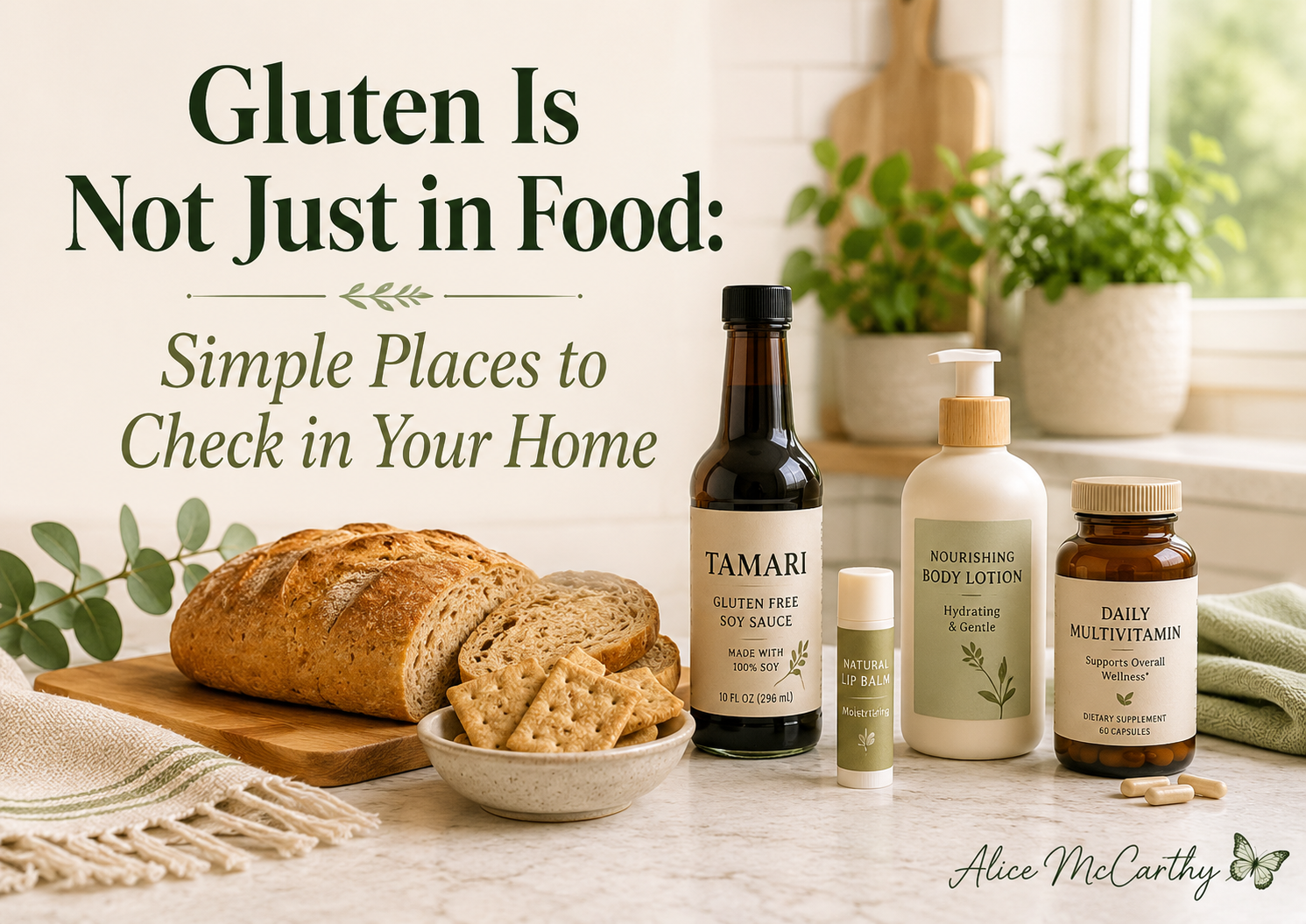
    Gluten Is Not Just in Food: Simple Places to Check in Your Home

    When people think about gluten, they usually think about bread, pasta, crackers, cookies, and baked goods.

    And yes, gluten can be in all of those.

    But here is something a lot of people do not realize at first:

    Gluten is not just in food.

    It can show up in places around the home that we might not even think to check.

    Now, I am not saying this to make life feel scary or overwhelming. That is not my style.

    I am saying it because once you know better, you can start making simple swaps.

    One product at a time.
    One label at a time.
    One habit at a time.

    That is how we build a healthier home without making ourselves crazy.

    Why Gluten Can Be Sneaky

    Gluten is a protein found in wheat, barley, and rye.

    Most of us know to check food labels, but gluten can also be used in other products as a thickener, binder, or ingredient.

    That means it may be hiding in everyday items.

    And if you are someone with celiac disease, gluten sensitivity, or you are trying to keep your home gluten-free for someone you love, those little details matter.

    Not because we need to live in fear.

    Because we want peace of mind.

    1. Check Your Skincare

    This is a big one.

    A lot of people only think about what goes in their mouth, but we also use products on our skin every single day.

    Things like:

    • Lotion
    • Face cream
    • Body wash
    • Lip balm
    • Sunscreen
    • Makeup
    • Hand cream

    Now, gluten cannot be absorbed through the skin the same way it affects the digestive system when eaten, but here is where I pay attention:

    If it is on your hands, lips, or face, it can accidentally get near your mouth.

    That is why I like to check labels, especially for lip products, hand products, and anything used around the mouth.

    Simple awareness. No panic.

    2. Check Lip Balm and Lipstick

    Lip products deserve their own little section because they are right on your mouth.

    Lip balm, lipstick, gloss, and chapstick can be easy places to overlook.

    If you are gluten-free, this is one of the first personal care products I would check.

    Look for products labeled:

    • Gluten-free
    • Free from wheat
    • Free from barley
    • Free from rye

    And remember, ingredients can change, so checking once in a while is a good habit.

    3. Check Supplements and Vitamins

    This one is important.

    Supplements, vitamins, drink mixes, protein powders, and fiber products can sometimes contain gluten or be made in facilities where gluten is present.

    Check things like:

    • Multivitamins
    • Probiotics
    • Fiber powders
    • Protein shakes
    • Greens powders
    • Collagen blends
    • Meal replacement drinks

    Look for clear labeling.

    If the label does not tell you enough, go to the company website or reach out to customer service.

    You are allowed to ask questions about what you are putting in your body.

    4. Check Medicine and Over-the-Counter Products

    Some medications and over-the-counter products may contain inactive ingredients that are not always easy to understand.

    This could include:

    • Pain relievers
    • Cold medicine
    • Chewable tablets
    • Antacids
    • Cough drops
    • Digestive aids

    If gluten is a serious concern for you or someone in your home, ask the pharmacist.

    That is what they are there for.

    You do not have to guess.

    5. Check Sauces, Seasonings, and Packets

    Now back to the kitchen for a minute.

    Gluten can sneak into things that do not look like “bread foods.”

    Check labels on:

    • Soy sauce
    • Marinades
    • Gravy packets
    • Seasoning blends
    • Soup mixes
    • Salad dressings
    • Bouillon cubes
    • Sauce packets

    This is where a lot of people get caught off guard.

    The front of the package may look safe, but the ingredient list tells the real story.

    6. Check Your Toaster and Cutting Boards

    This is one of those practical home things.

    If regular bread and gluten-free bread go into the same toaster, crumbs can be a problem.

    Same with cutting boards, wooden spoons, and surfaces that hold onto crumbs or residue.

    Simple swaps:

    • Have a separate gluten-free toaster
    • Use toaster bags
    • Keep a dedicated cutting board
    • Wipe counters before prepping food
    • Store gluten-free items away from regular flour and bread

    This does not have to be fancy.

    It just has to work.

    7. Check Pet Treats and Pet Food

    This one surprises people too.

    Some pet treats and foods may contain wheat or gluten ingredients.

    Now, I am not saying your pet needs to be gluten-free.

    But if you handle treats, feed the dog, wipe their mouth, or they lick your hands or face, it may be something to think about.

    Especially if someone in the home is very sensitive.

    Wash hands after handling pet food and treats.

    Simple. Real life. No drama.

    8. Check Kids’ Craft Supplies

    If you have grandkids around, this matters.

    Some craft supplies may contain wheat or gluten.

    Things like:

    • Play dough
    • Certain paints
    • Craft paste
    • Paper mâché
    • Some sensory products

    If little hands are playing and then touching snacks, faces, or kitchen surfaces, that can be a concern.

    Again, we are not trying to take all the fun out of life.

    We are just paying attention.

    9. Check Restaurant Leftovers and Shared Foods

    Sometimes gluten comes home with us.

    Restaurant leftovers, family party foods, shared dips, and takeout containers can be tricky.

    If the food was prepared near gluten, touched with shared utensils, or placed near breaded items, cross-contact can happen.

    This is why I like simple systems:

    • Label gluten-free leftovers
    • Keep them on a separate shelf
    • Use clean utensils
    • Do not double dip
    • Keep gluten-free snacks separate at gatherings

    It sounds small, but small habits protect peace.

    10. Swap Confusion for Simple Systems

    This is where I want women to breathe.

    You do not have to figure everything out overnight.

    Start with the products you use the most.

    Maybe this week you check your lip balm.

    Next week you check your supplements.

    Then your sauces.

    Then your skincare.

    That is how you make progress without feeling overwhelmed.

    Final Thoughts

    Gluten-free living is not about being perfect.

    It is about becoming aware.

    It is about learning where gluten may hide and making choices that support your health and your home.

    If you are over 50 and just starting to pay closer attention, you are not behind.

    You are learning.

    You are building new habits.

    You are creating a home that feels safer, simpler, and more supportive.

    That matters.

    One label.
    One swap.
    One step at a time.

    You got this. 💜

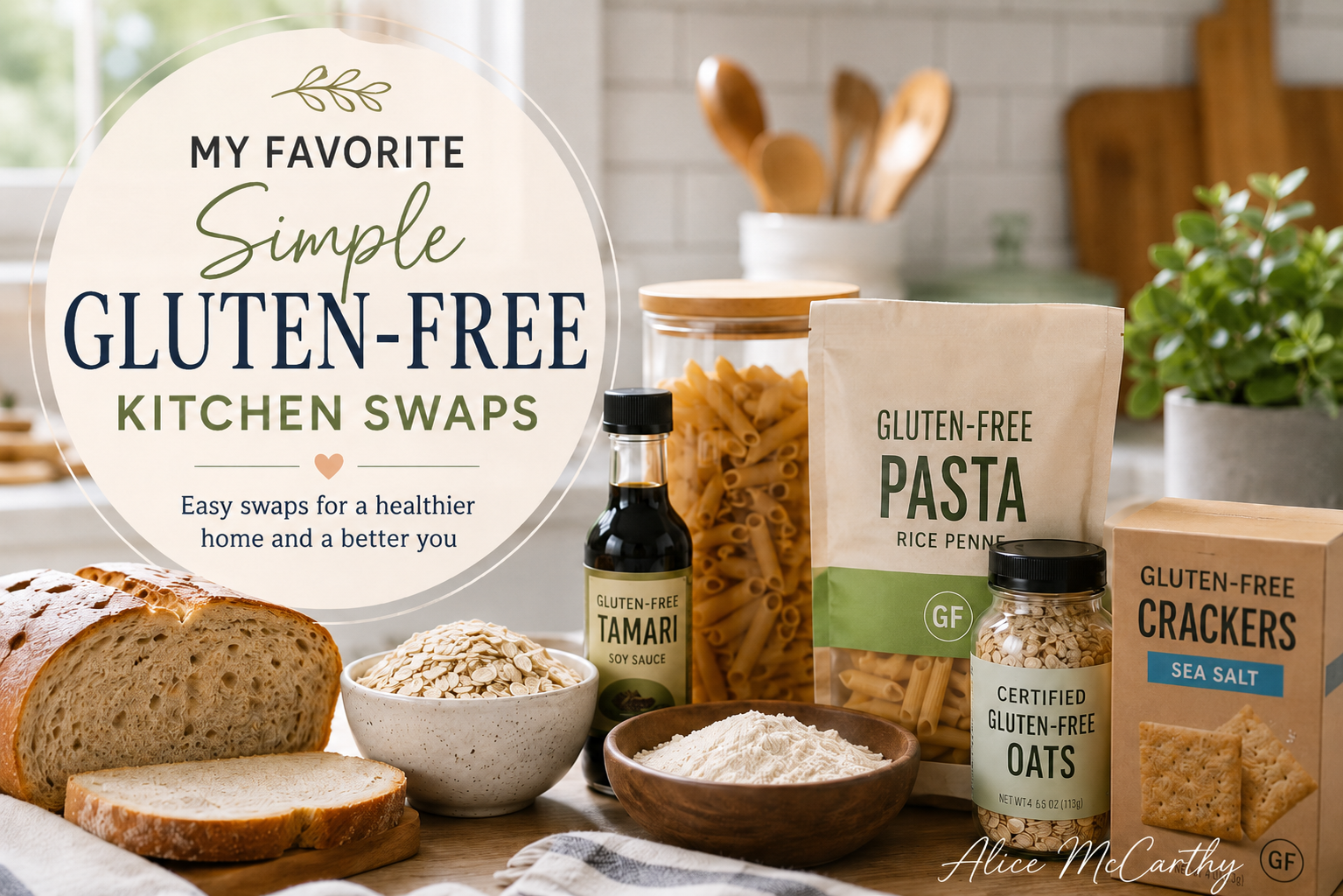
  • My Favorite Simple Gluten-Free Kitchen Swaps

    My Favorite Simple Gluten-Free Kitchen Swaps

    When people hear gluten-free, they sometimes think it means hard, expensive, or giving up everything they enjoy.

    I get it.

    But honestly, living gluten-free does not have to be complicated.

    For me, it is about learning simple swaps. One choice at a time. One product at a time. One habit at a time.

    And if you are a woman over 50, a grandma, a mom, or someone trying to feel better in your body, the last thing you need is more overwhelm.

    You need simple.

    So today I am sharing some of my favorite gluten-free kitchen swaps that can help make your home feel easier, healthier, and more peaceful.

    1. Swap Regular Bread for Gluten-Free Bread

    This is usually one of the first swaps people think about.

    Now let’s be honest.

    Not all gluten-free bread tastes good. Some of it is dry. Some of it falls apart. Some of it tastes like cardboard with confidence.

    But there are better options now than there used to be.

    Look for gluten-free bread that has simple ingredients and works for how you actually eat.

    Toast it. Use it for eggs. Make a sandwich. Keep it practical.

    You do not need perfect. You need something that works.

    2. Swap Regular Pasta for Gluten-Free Pasta

    This is one of the easiest swaps because there are so many options now.

    You can find gluten-free pasta made from:

    • Brown rice
    • Corn
    • Chickpeas
    • Lentils
    • Quinoa blends

    My tip is this: do not overcook it.

    Gluten-free pasta can go from perfect to mushy real fast.

    Keep an eye on it and rinse it if the package says to. Some brands do better than others, so this may take a little trial and error.

    And that is okay.

    3. Swap Flour for Gluten-Free Flour Blends

    If you like to bake, gluten-free flour blends can be a lifesaver.

    A one-to-one gluten-free flour blend can usually replace regular flour in many recipes.

    This is great for things like:

    • Muffins
    • Pancakes
    • Cookies
    • Banana bread
    • Simple baked goods

    Now, gluten-free baking is not always exactly the same. Texture can be different.

    But again, we are not trying to win a baking show here.

    We are trying to make food our family can enjoy without gluten sneaking in.

    4. Swap Crackers for Gluten-Free Crackers or Veggies

    This is a simple one.

    Instead of regular crackers, keep gluten-free crackers on hand.

    You can use them with:

    • Cheese
    • Tuna
    • Chicken salad
    • Hummus
    • Peanut butter
    • Turkey slices

    You can also use cucumber slices, peppers, or apple slices if you want something fresh and crunchy.

    Simple does not mean boring.

    5. Swap Breadcrumbs for Gluten-Free Options

    Breadcrumbs hide in a lot of recipes.

    Meatballs, meatloaf, chicken coating, casseroles, and toppings can all have gluten.

    Easy swaps include:

    • Gluten-free breadcrumbs
    • Crushed gluten-free crackers
    • Almond flour
    • Crushed gluten-free cereal
    • Parmesan cheese, depending on the recipe

    This is one of those swaps that makes a big difference because gluten can sneak in when we are not thinking about it.

    6. Swap Soy Sauce for Gluten-Free Tamari or Coconut Aminos

    This one surprises people.

    Regular soy sauce usually contains wheat.

    So if you are cooking stir fry, marinades, sauces, or rice bowls, check the label.

    A simple swap is:

    • Gluten-free tamari
    • Coconut aminos

    This is one of those little pantry changes that helps make your kitchen safer and easier.

    7. Swap Regular Oats for Certified Gluten-Free Oats

    Oats are naturally gluten-free, but they are often processed around wheat.

    That means cross-contact can happen.

    If you use oats for oatmeal, protein bites, muffins, or breakfast bowls, look for certified gluten-free oats.

    That one word matters: certified.

    It gives you a little more peace of mind.

    8. Swap “I Think It’s Fine” for Reading Labels

    This is probably the biggest swap.

    Gluten can hide in places you would not expect.

    Things like:

    • Sauces
    • Seasoning packets
    • Gravy mixes
    • Salad dressings
    • Soups
    • Processed meats
    • Candy
    • Chips
    • Marinades

    This does not mean you need to panic.

    It just means you slow down and read the label.

    That is a habit.

    And habits get easier the more you do them.

    9. Swap Shared Toasters for a Gluten-Free Toasting Option

    If someone in your home still eats gluten, the toaster can be a problem.

    Crumbs matter.

    You can use:

    • A separate gluten-free toaster
    • Toaster bags
    • A clean pan
    • An air fryer with clean parchment

    This is especially important if someone has celiac disease or is very sensitive to gluten.

    It is not being dramatic.

    It is being careful.

    10. Swap Confusion for a Simple Gluten-Free Shelf

    One thing I love is making things visible and easy.

    Create a small gluten-free area in your kitchen.

    It could be:

    • One shelf
    • One cabinet
    • One basket
    • One pantry section

    Put your gluten-free items there so you are not digging around every day.

    Simple systems make healthy living easier.

    And at this age, we are not here to make life harder.

    Final Thoughts

    Going gluten-free does not have to mean changing everything overnight.

    Start with the foods you use most.

    Bread. Pasta. Flour. Crackers. Sauces. Oats.

    One swap at a time.

    That is how we build a kitchen that supports our health without feeling like we are starting over.

    And remember this:

    You are not behind.

    You are learning.

    You are paying attention.

    You are creating a home that works better for your body and your family.

    That matters.

    You got this. 💜