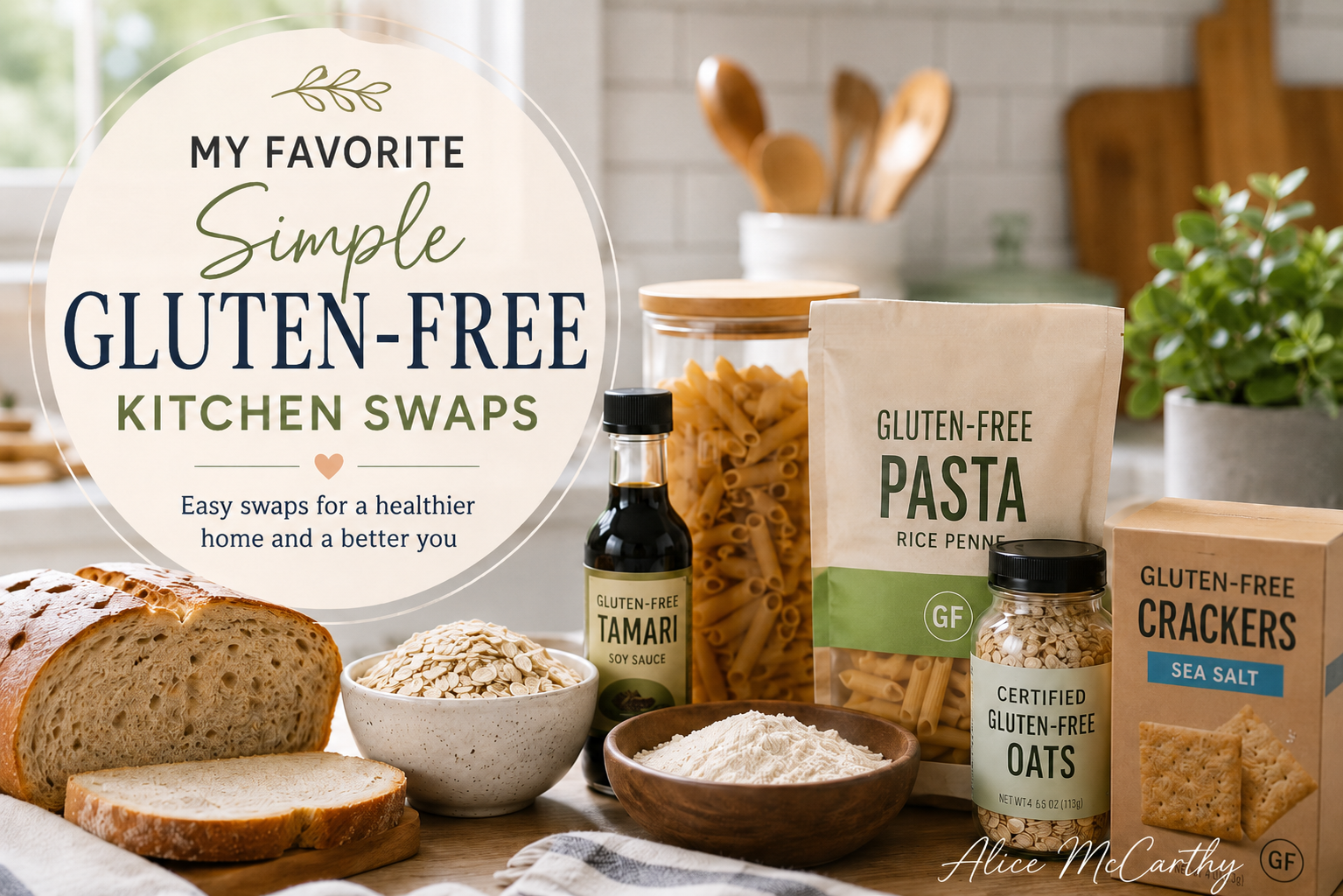
When people hear gluten-free, they sometimes think it means hard, expensive, or giving up everything they enjoy.
I get it.
But honestly, living gluten-free does not have to be complicated.
For me, it is about learning simple swaps. One choice at a time. One product at a time. One habit at a time.
And if you are a woman over 50, a grandma, a mom, or someone trying to feel better in your body, the last thing you need is more overwhelm.
You need simple.
So today I am sharing some of my favorite gluten-free kitchen swaps that can help make your home feel easier, healthier, and more peaceful.
1. Swap Regular Bread for Gluten-Free Bread
This is usually one of the first swaps people think about.
Now let’s be honest.
Not all gluten-free bread tastes good. Some of it is dry. Some of it falls apart. Some of it tastes like cardboard with confidence.
But there are better options now than there used to be.
Look for gluten-free bread that has simple ingredients and works for how you actually eat.
Toast it. Use it for eggs. Make a sandwich. Keep it practical.
You do not need perfect. You need something that works.
2. Swap Regular Pasta for Gluten-Free Pasta
This is one of the easiest swaps because there are so many options now.
You can find gluten-free pasta made from:
- Brown rice
- Corn
- Chickpeas
- Lentils
- Quinoa blends
My tip is this: do not overcook it.
Gluten-free pasta can go from perfect to mushy real fast.
Keep an eye on it and rinse it if the package says to. Some brands do better than others, so this may take a little trial and error.
And that is okay.
3. Swap Flour for Gluten-Free Flour Blends
If you like to bake, gluten-free flour blends can be a lifesaver.
A one-to-one gluten-free flour blend can usually replace regular flour in many recipes.
This is great for things like:
- Muffins
- Pancakes
- Cookies
- Banana bread
- Simple baked goods
Now, gluten-free baking is not always exactly the same. Texture can be different.
But again, we are not trying to win a baking show here.
We are trying to make food our family can enjoy without gluten sneaking in.
4. Swap Crackers for Gluten-Free Crackers or Veggies
This is a simple one.
Instead of regular crackers, keep gluten-free crackers on hand.
You can use them with:
- Cheese
- Tuna
- Chicken salad
- Hummus
- Peanut butter
- Turkey slices
You can also use cucumber slices, peppers, or apple slices if you want something fresh and crunchy.
Simple does not mean boring.
5. Swap Breadcrumbs for Gluten-Free Options
Breadcrumbs hide in a lot of recipes.
Meatballs, meatloaf, chicken coating, casseroles, and toppings can all have gluten.
Easy swaps include:
- Gluten-free breadcrumbs
- Crushed gluten-free crackers
- Almond flour
- Crushed gluten-free cereal
- Parmesan cheese, depending on the recipe
This is one of those swaps that makes a big difference because gluten can sneak in when we are not thinking about it.
6. Swap Soy Sauce for Gluten-Free Tamari or Coconut Aminos
This one surprises people.
Regular soy sauce usually contains wheat.
So if you are cooking stir fry, marinades, sauces, or rice bowls, check the label.
A simple swap is:
- Gluten-free tamari
- Coconut aminos
This is one of those little pantry changes that helps make your kitchen safer and easier.
7. Swap Regular Oats for Certified Gluten-Free Oats
Oats are naturally gluten-free, but they are often processed around wheat.
That means cross-contact can happen.
If you use oats for oatmeal, protein bites, muffins, or breakfast bowls, look for certified gluten-free oats.
That one word matters: certified.
It gives you a little more peace of mind.
8. Swap “I Think It’s Fine” for Reading Labels
This is probably the biggest swap.
Gluten can hide in places you would not expect.
Things like:
- Sauces
- Seasoning packets
- Gravy mixes
- Salad dressings
- Soups
- Processed meats
- Candy
- Chips
- Marinades
This does not mean you need to panic.
It just means you slow down and read the label.
That is a habit.
And habits get easier the more you do them.
9. Swap Shared Toasters for a Gluten-Free Toasting Option
If someone in your home still eats gluten, the toaster can be a problem.
Crumbs matter.
You can use:
- A separate gluten-free toaster
- Toaster bags
- A clean pan
- An air fryer with clean parchment
This is especially important if someone has celiac disease or is very sensitive to gluten.
It is not being dramatic.
It is being careful.
10. Swap Confusion for a Simple Gluten-Free Shelf
One thing I love is making things visible and easy.
Create a small gluten-free area in your kitchen.
It could be:
- One shelf
- One cabinet
- One basket
- One pantry section
Put your gluten-free items there so you are not digging around every day.
Simple systems make healthy living easier.
And at this age, we are not here to make life harder.
Final Thoughts
Going gluten-free does not have to mean changing everything overnight.
Start with the foods you use most.
Bread. Pasta. Flour. Crackers. Sauces. Oats.
One swap at a time.
That is how we build a kitchen that supports our health without feeling like we are starting over.
And remember this:
You are not behind.
You are learning.
You are paying attention.
You are creating a home that works better for your body and your family.
That matters.
You got this. 💜
Leave a Reply