Author: Alice McCarthy

  • Unique Christmas Gift Ideas for Women, Pet Lovers & Hard-to-Shop-For People

    Unique Christmas Gift Ideas for Women, Pet Lovers & Hard-to-Shop-For People

    Finding the right Christmas gift should feel fun.

    But sometimes it feels more like walking around asking yourself:

    What do you buy for someone who already has everything?

    Or the woman who says:

    “I don’t need anything.”

    Or the pet lover who would rather buy something for her dog than for herself. 😂

    That is exactly why I put this list together.

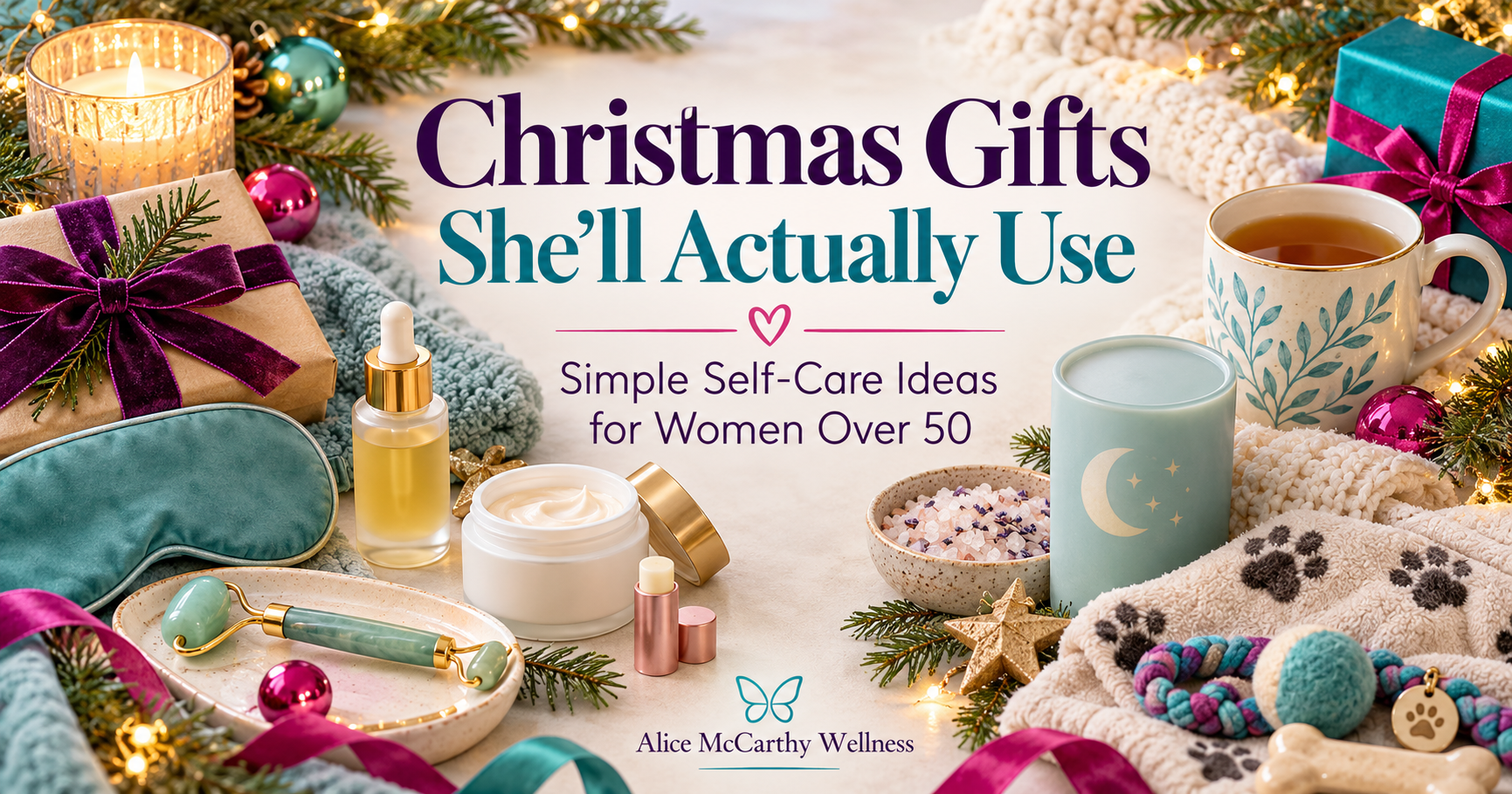
    These are Christmas gift ideas that feel thoughtful, useful, cozy, practical and a little unexpected.

    No pressure to buy the biggest gift.

    No need to spend a fortune.

    Sometimes the best gifts are the ones that say:

    “I saw this and thought of you.”

    This post may contain affiliate links. I may earn a small commission from qualifying purchases at no additional cost to you.

    As an Amazon Associate I earn from qualifying purchases.

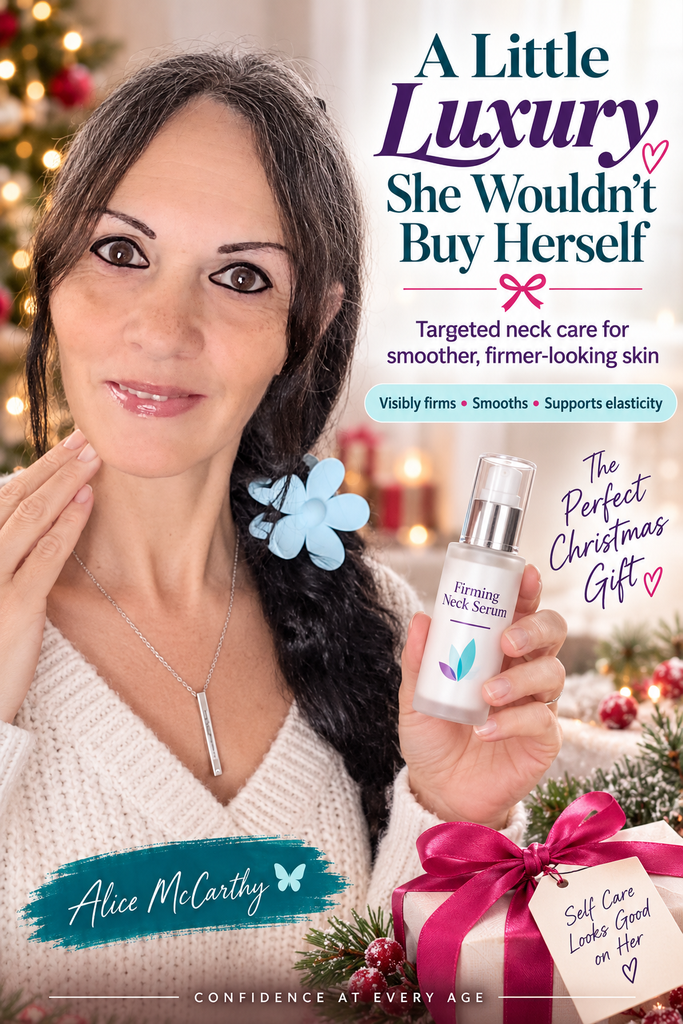
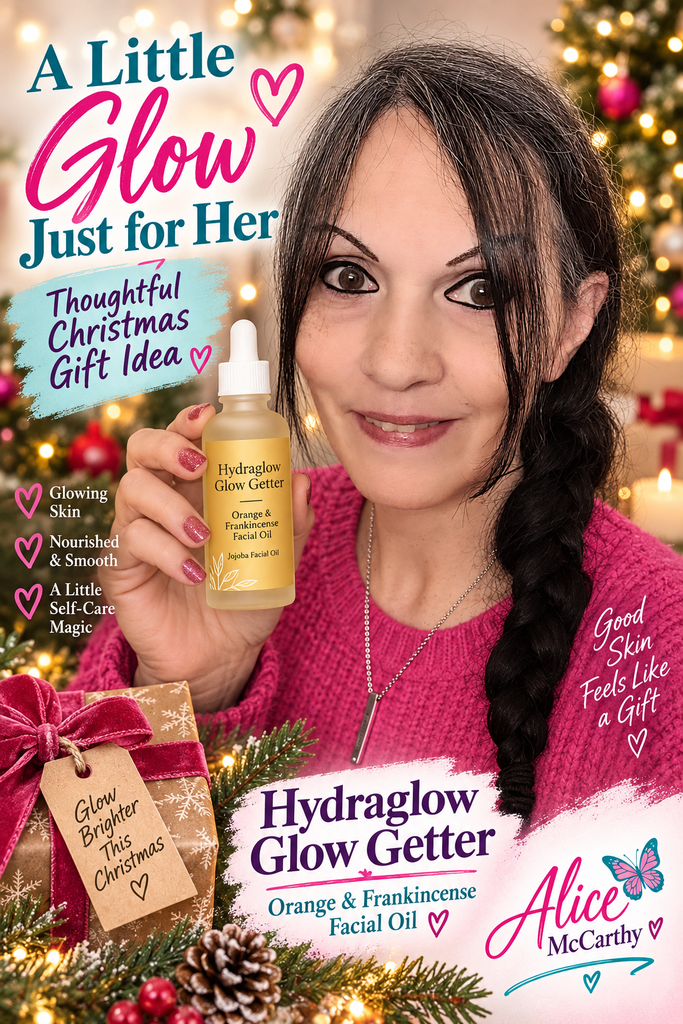
    Christmas Gifts for Women Over 50

    Women over 50 usually know what they like.

    We have enough mugs.

    We probably have enough blankets.

    And we definitely do not need more clutter just for the sake of having something under the tree.

    That is why I love gifts that are useful, comforting or make everyday life feel a little nicer.

    Think about:

    • Luxurious hand and body lotion
    • Nourishing body butter
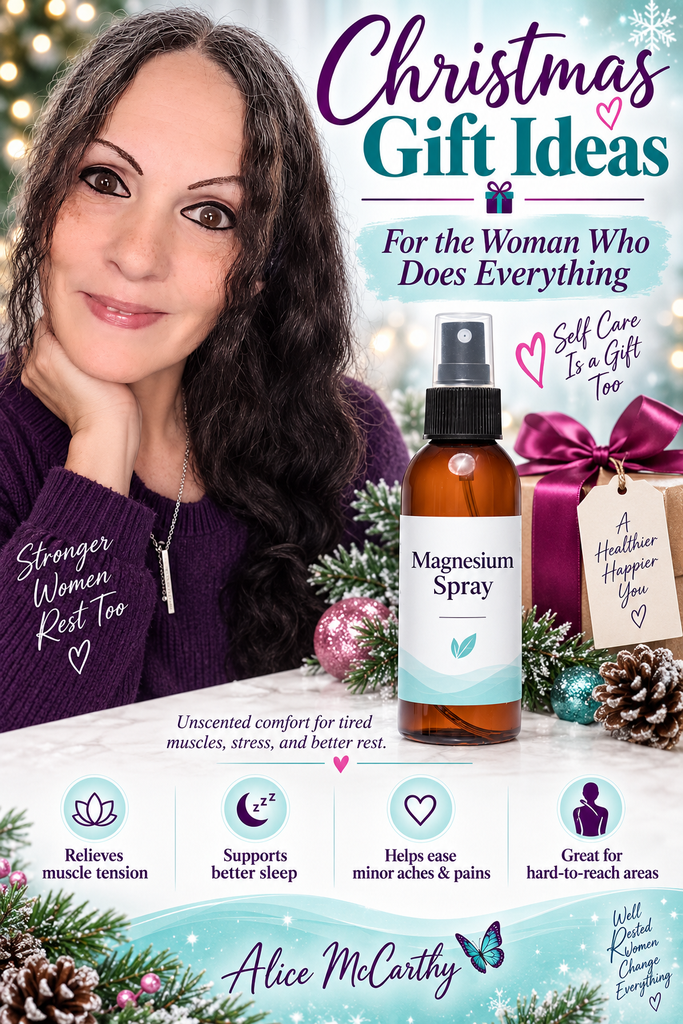
    • Magnesium body products
    • Gentle skincare
    • Essential oils
    • Soft slippers
    • A beautiful journal
    • A cozy robe
    • A good book
    • A quality water bottle or insulated coffee cup

    A great question to ask is:

    Would she use this after Christmas is over?

    If the answer is yes, you may have found a winner.

    Self-Care Christmas Gift Ideas

    Self-care does not have to mean spending an entire day at a spa.

    Sometimes it is ten quiet minutes before everybody else wakes up.

    A warm shower.

    A favorite lotion.

    A cup of coffee.

    Taking care of your skin.

    Or shutting the door for five minutes and letting the world survive without you. 😉

    Some thoughtful self-care gift ideas include:

    • Body lotion
    • Shea body butter
    • Hand care products
    • Bath or shower products
    • Face masks
    • Skincare sets
    • Essential oil products
    • Magnesium lotion
    • Cozy socks
    • Candles
    • Journals
    • Herbal tea
    • Sleep masks

    You could even create a small self-care basket instead of buying one large gift.

    Add a lotion, cozy socks, tea and a little handwritten note.

    Simple.

    Personal.

    Useful.

    Christmas Gifts for Moms and Grandmas

    Moms and grandmas are sometimes the hardest people to shop for because they are usually busy buying for everybody else.

    That is exactly why a little pampering can mean so much.

    Consider gifts that encourage her to slow down and enjoy something for herself.

    A few ideas:

    • A nice skincare product
    • Hand cream
    • Body butter
    • Essential oils
    • A relaxing magnesium product
    • A photo book
    • A personalized ornament
    • A framed family picture
    • A cozy sweater
    • A favorite book
    • A beautiful devotional or journal

    And sometimes the best gift is not a product at all.

    Take her to lunch.

    Spend the afternoon together.

    Bring coffee over.

    Give her your time.

    Those gifts tend to stick with us.

    Gifts for the Woman Who Says “I Don’t Need Anything”

    We all know her.

    You ask what she wants for Christmas and she says:

    “Nothing.”

    Very helpful. 😂

    This is where small luxuries work beautifully.

    Look for something she probably would enjoy but may not buy for herself.

    That could be:

    • Luxury lotion
    • Skin care
    • Body butter
    • A beautiful fragrance
    • Essential oils
    • Nice pajamas
    • Quality coffee
    • A pretty journal
    • A relaxing bath product
    • A favorite snack or treat

    The goal is not more stuff.

    It is something she will actually enjoy using.

    Unique Christmas Gifts for Pet Lovers

    Now we are speaking my language. 🐾

    Some of us will happily skip our own gift if you bring something for the dog.

    Pet lovers are fun to shop for because you can buy something for them, something for their pet, or both.

    Christmas gift ideas for pet lovers could include:

    • Pet grooming products
    • Pet-safe care products
    • A new leash or collar
    • Personalized pet ornaments
    • Pet blankets
    • Dog toys
    • Treat containers
    • Pet portraits
    • Matching pet-and-owner accessories
    • Paw-print keepsakes

    You could also create a pet parent gift basket.

    Put together a few pet care items, treats, a toy and something small for the human too.

    That would make such a cute Christmas gift.

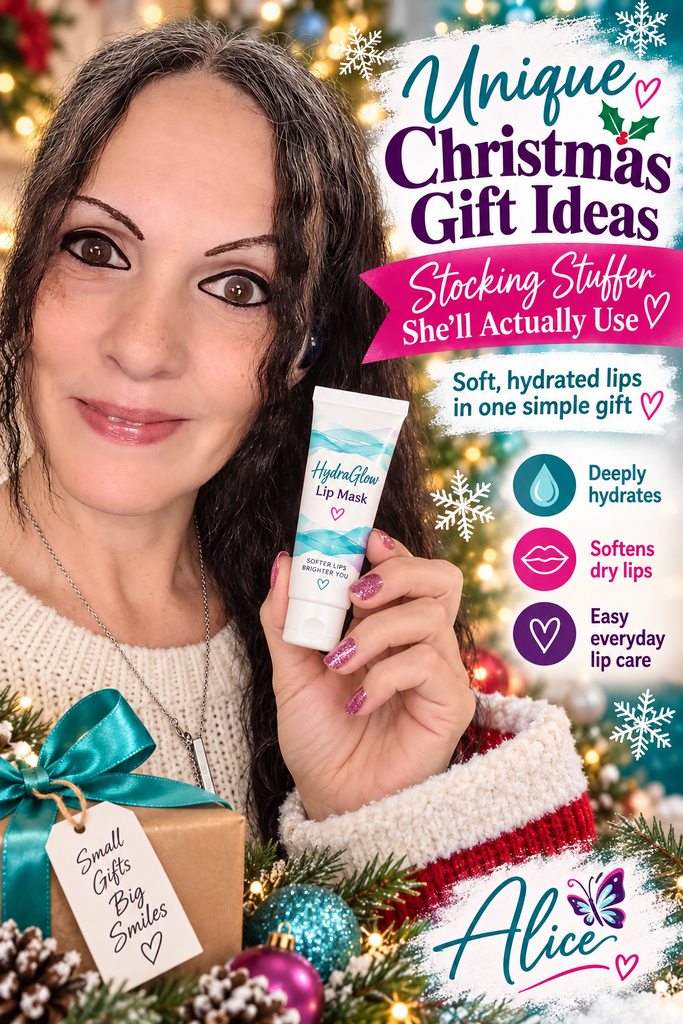
    Stocking Stuffers for Women

    Stocking stuffers do not have to be junk that ends up in a drawer.

    I love small gifts people can actually use.

    Some ideas:

    • Hand lotion
    • Lip care
    • Small skincare products
    • Essential oil rollers
    • Nail products
    • Mini body care items
    • Cozy socks
    • Hair accessories
    • Small journals
    • Pens
    • Coffee gift cards
    • Tea
    • Chocolate
    • Small pet gifts for the dog mom

    Little gifts can still feel thoughtful.

    Christmas Gifts Under $25

    You do not have to spend a lot to give a good gift.

    Some of my favorite gifts fall into this price range.

    Look for:

    • Lotion
    • Hand cream
    • Small body care products
    • Essential oils
    • Candles
    • Books
    • Journals
    • Coffee mugs paired with coffee or tea
    • Pet toys
    • Personalized ornaments
    • Small Amazon finds
    • Cozy socks
    • Kitchen gadgets

    This price range is especially helpful for:

    Teachers.

    Coworkers.

    Friends.

    Neighbors.

    Hostess gifts.

    And stocking stuffers.

    Christmas Gifts Under $50

    If your budget is a little higher, you can create something that feels extra special without going overboard.

    Ideas could include:

    • Skincare sets
    • Body care sets
    • Wellness products
    • Pajamas
    • Slippers
    • Small kitchen appliances
    • Personalized gifts
    • Gift baskets
    • Pet gift bundles
    • Beauty products
    • Cozy home items

    You could also combine two or three smaller products into a themed gift.

    For example:

    The Cozy Night Gift

    Add a lotion, fuzzy socks, tea and a book.

    Or:

    The Dog Mom Gift

    Add something for her and something for her dog.

    That is much more memorable than grabbing something random.

    Amazon Christmas Gift Ideas

    Amazon can be especially helpful when you are shopping for someone who has a very specific interest.

    Some Amazon gift categories I like looking through include:

    • Gifts for women
    • Gifts for women over 50
    • Kitchen gadgets
    • Coffee accessories
    • Cozy home gifts
    • Books
    • Journals
    • Pet gifts
    • Dog mom gifts
    • Gardening gifts
    • Bird lover gifts
    • Wellness accessories
    • Exercise and fitness gifts

    When I share specific Amazon finds, I always try to choose things that are practical, useful or simply fun.

    Because nobody needs another gadget that lives in a drawer forever.

    Small Business Christmas Gifts

    Do not forget small businesses when you are shopping.

    Buying from a small business often means you are supporting a family, a dream or someone building something of their own.

    And you can find some really unique gifts.

    Look for:

    • Handmade products
    • Personal care items
    • Jewelry
    • Personalized gifts
    • Pet products
    • Candles
    • Clothing
    • Home decor
    • Wellness products
    • Bath and body products
    • Local foods
    • Artwork

    You might find something that your recipient would never see in a big-box store.

    Give an Experience Instead of More Stuff

    Not every Christmas gift needs to come in a box.

    Experiences can be some of the best gifts.

    Think about:

    • Lunch together
    • Dinner out
    • Movie tickets
    • A spa day
    • A manicure
    • A craft class
    • A local event
    • A weekend trip
    • A day with the grandkids
    • A coffee date

    You could even make a little certificate yourself.

    Sometimes what people really want is time together.

    How to Choose a Christmas Gift They Will Actually Love

    Before buying something, ask yourself three simple questions.

    Will they use it?

    Does it fit their personality?

    Does it make me think of them?

    If you can answer yes to at least two of those, you are probably on the right track.

    You do not need the most expensive gift.

    You do not need the trendiest gift.

    And you definitely do not need to compete with anybody else’s Christmas.

    Thoughtful wins.

    Every time.

    A Simpler Way to Shop for Christmas

    Christmas shopping gets overwhelming when we try to do everything at once.

    Instead, start early.

    Make a list.

    Choose a budget.

    And shop for one or two people at a time.

    Pinterest is actually great for this.

    Create a board.

    Save ideas throughout the season.

    Then when you are ready to buy, you already have options waiting for you.

    That is exactly why I created my Unique Holiday Gift Ideas board.

    I will be adding ideas for women, moms, grandmas, pet lovers, stocking stuffers, wellness gifts, Amazon finds and those hard-to-shop-for people all season long.

    And remember:

    The best Christmas gift does not have to be impressive.

    It just needs to feel like you thought about the person receiving it.

    That is what makes a gift special. 🎄🦋

  • Fat Loss Is Not the Same as Weight Loss

    Fat Loss Is Not the Same as Weight Loss

    If you’ve ever wondered about fat loss after 50, there is an important difference worth understanding.

    For years, many of us were taught that if the number on the scale went down, we were succeeding.

    If it went up, we assumed we were doing something wrong.

    But the scale doesn’t tell us what we’re actually losing.

    And after 50, that matters.

    Because losing weight can include losing water and muscle, while fat loss focuses on reducing excess body fat while protecting the lean muscle we need for strength, mobility, and healthy aging.

    What Is Weight Loss?

    Weight loss simply means your total body weight has gone down.

    That number includes more than body fat. Your body weight is made up of:

    • Fat
    • Muscle
    • Water
    • Bone
    • Organs
    • Food moving through your digestive system

    So when the scale drops two pounds, it does not automatically mean you lost two pounds of fat.

    Some of that change may simply be water.

    And depending on how you are eating and exercising, some of it could unfortunately be muscle.

    That matters more as we get older.

    What Is Fat Loss?

    Fat loss means your body is reducing stored body fat while ideally maintaining as much lean muscle as possible.

    That is a very different goal.

    For women over 50, I would rather see us focusing on:

    Losing excess fat while protecting and building muscle.

    Muscle helps support our strength, mobility, balance, metabolism, and independence as we age.

    This is one reason I have become much more interested in building muscle to stay strong as we age than simply chasing a lower number on the scale.

    That is also why eating less and less is not always the answer.

    Sometimes the better answer is eating better, getting enough protein, strength training, moving every day, sleeping well, and giving our bodies time to respond.

    Fat Loss After 50 Can Happen Without a Big Change on the Scale

    This one can mess with your head.

    You have been consistent.

    Your clothes fit better.

    Your waist feels smaller.

    You are lifting heavier weights.

    You feel stronger.

    Then you step on the scale…

    And nothing happened.

    Or maybe the number even went up a little.

    That does not automatically mean you gained body fat.

    If you are strength training, your body may hold extra water while your muscles recover. You may also be building lean tissue while losing fat.

    That is why I like looking at more than one measurement of progress.

    Better Ways to Measure Progress After 50

    The scale can still be useful.

    It just should not be the boss.

    Pay attention to things like:

    • Waist, hip, arm, and thigh measurements
    • How your jeans fit
    • Strength improvements
    • Energy
    • Daily movement
    • How easily you get up from the floor or carry groceries
    • Consistency with protein and whole foods
    • Sleep
    • How you feel in your own body

    If you want another way to track progress, I also wrote about how to measure yourself and track body changes.

    Measurements can sometimes show changes that the scale completely misses.

    Sometimes the biggest victories never show up as a smaller number on the scale.

    Why Muscle Matters More as We Age

    For years, women were told:

    Eat less. Weigh less. Take up less space.

    But protecting muscle becomes increasingly important as we age.

    That means the goal does not have to be becoming the smallest version of ourselves.

    I would much rather become a stronger version of myself.

    Strength training tells your body that muscle is useful.

    Protein gives your body the building blocks it needs.

    Walking and everyday movement support overall health.

    And consistent habits give those things time to work.

    If strength is becoming one of your goals too, you may also like my post about building muscle after 50.

    No extreme plan required.

    Why Protein Matters After 50

    Protein is not just for bodybuilders.

    Our bodies use protein to help maintain and repair muscle.

    And when you are trying to lose fat, keeping protein in your meals can help support lean muscle while also making meals more satisfying.

    That might look as simple as:

    Eggs at breakfast.

    Greek yogurt or cottage cheese for a snack.

    Chicken or lean beef with lunch or dinner.

    A protein coffee when it works for you.

    It does not need to become another complicated diet rule.

    Think of protein as building material for the body you are asking to become stronger.

    You Do Not Have to Starve Yourself to Lose Fat

    This may be one of the hardest mindset shifts for women who grew up surrounded by diet culture.

    We were taught that progress meant eating as little as possible.

    But constantly under-eating can make it harder to get enough protein, nutrients, and energy to support muscle and everyday life.

    Instead of asking:

    “How little can I eat today?”

    Try asking:

    “What does my body need today to stay strong?”

    That question changes everything.

    This is also why I believe healthy progress after 50 has to be about more than weight alone.

    Keep It Simple

    You do not need to turn your life into a full-time fitness project.

    Start here:

    Eat a good source of protein at your meals.

    Choose mostly whole foods that work well for your body.

    Drink your water.

    Walk.

    Lift something.

    Sleep when you can.

    Repeat.

    Those ordinary habits may not be flashy enough for social media, but they are the habits we can still be doing years from now.

    And that matters.

    The Scale Is Only One Piece of the Story

    I am not anti-scale.

    I just don’t believe the scale deserves the final word.

    If your waist is shrinking…

    Your clothes fit differently…

    You’re getting stronger…

    You’re moving better…

    And you’re building habits you can actually maintain…

    That is progress.

    Especially after 50.

    The goal isn’t simply to weigh less.

    The goal is to lose the fat we don’t need while protecting the muscle, strength, energy, and independence we absolutely do.

    Because getting older doesn’t mean becoming smaller and weaker.

    It can mean becoming stronger on purpose. 🦋

  • Strength After 50: Protein, Muscle & Healthy Aging

    Strength After 50: Protein, Muscle & Healthy Aging

    For years, I thought the answer was always to eat less.

    Less food.
    Fewer calories.
    Smaller portions.
    A smaller number on the scale.

    And if the scale went down, I thought I was doing something right.

    But somewhere along the way, my thinking started to change.

    I’m 61 now, and I don’t just want to weigh less.

    I want to be strong.

    I want strong arms, strong legs, good balance, more energy, and a body that can keep up with the life I still want to live.

    And if you’re a woman over 50, maybe you’ve been thinking about this too.

    Because at some point, the goal starts becoming bigger than fitting into a smaller size.

    It becomes:

    How do I stay strong?

    How do I protect my independence?

    How do I keep doing the things I love?

    That changed the question for me.

    Instead of always asking:

    “How little can I eat?”

    I’m learning to ask:

    “What does my body need to stay strong?”

    Protein Started Looking Different

    I used to look at food mostly through the lens of calories.

    Now I’m paying much more attention to protein.

    Eggs. Cottage cheese. Greek yogurt. Meat. Protein in my coffee.

    Nothing fancy.

    Just real food and simple choices.

    And here’s the part I think a lot of women over 50 need to hear:

    You do not have to completely overhaul the way you eat to begin supporting your strength.

    Start with one meal.

    Look at your breakfast tomorrow and ask:

    Where’s my protein?

    Maybe it’s eggs.

    Maybe it’s cottage cheese.

    Maybe it’s Greek yogurt.

    Maybe it’s something else that works for you.

    And if gluten-free eating is part of your household like it is mine, simple matters even more. I shared some of the things that have made our kitchen easier in my post My Favorite Simple Gluten-Free Kitchen Swaps.

    I’m learning that healthy eating doesn’t have to mean complicated eating.

    I’m Not Trying to Eat as Little as Possible Anymore

    This has probably been one of the biggest mindset changes for me.

    For so many years, we heard:

    Eat less.

    Cut the calories.

    Lose the weight.

    And yes, maintaining a healthy weight still matters to me.

    But now I’m asking another question too:

    Am I giving my body enough of what it needs?

    Because if I’m asking my muscles to work harder, I also need to support them.

    That doesn’t mean eating everything in sight.

    It means becoming more intentional.

    Protein.

    Real food.

    Water.

    Movement.

    And paying attention to hunger instead of constantly fighting it.

    That fits with something I have talked about before: women over 50 often don’t need another complicated plan. We need something simple enough to actually live with.

    I wrote more about that in Why Women Over 50 Need Simplicity, Not Another Diet.

    You Don’t Have to Become a “Gym Person”

    Here’s another thing I never expected.

    I’m actually learning to enjoy lifting weights. 😂

    And I’m doing it at home.

    No fancy gym.

    No complicated routine.

    Just weights, simple exercises, and learning as I go.

    Some days I surprise myself.

    Other days I pick up a weight and think…

    Well, that got heavy fast.

    😂

    But that’s okay.

    I’m not trying to prove anything.

    I’m building something.

    Strength.

    If you’re over 50 and haven’t done much strength training, you don’t have to start big.

    You might begin with:

    • light dumbbells
    • resistance bands
    • body-weight squats
    • wall pushups
    • a few simple strength exercises at home

    The goal isn’t to impress anyone.

    The goal is to make everyday life easier.

    Carrying groceries.

    Walking up stairs.

    Getting up off the floor.

    Working around your home or yard.

    Picking up a grandchild.

    Doing the things we sometimes don’t think about until they become harder.

    That’s the kind of strength I want.

    The Scale Isn’t the Whole Story

    Now this one has taken me some time to learn.

    I still weigh myself.

    The scale isn’t banned from my bathroom. 😂

    But I’m learning not to give it more power than it deserves.

    Because what if your weight stays the same…

    but you’re stronger?

    What if your clothes fit differently?

    What if your measurements change?

    What if you have more energy?

    What if you can lift something today that you couldn’t lift a month ago?

    Those things count too.

    I actually wrote an entire post about this because I think women need to hear it:

    The Scale Is Just One Tool: Why Inches Matter Too.

    If that scale has ever ruined an otherwise perfectly good morning for you, read that one.

    One number does not get to tell the entire story of what is happening inside your body.

    Start Smaller Than You Think

    Here’s where I think we sometimes make health harder than it needs to be.

    We decide we’re going to change everything.

    Monday morning comes and suddenly we’re going to:

    eat perfectly
    work out every day
    drink all the water
    never eat sugar again
    get eight hours of sleep
    and somehow become a completely different woman by Friday.

    😂

    No wonder we get tired.

    What if instead, you chose one thing?

    Maybe tomorrow you add protein to breakfast.

    Maybe you drink another glass of water.

    Maybe you take a ten-minute walk.

    Maybe you pick up a pair of weights.

    Then do it again.

    That is much closer to the way I’m trying to live now.

    I’ve also been learning more about choosing foods that help keep things steadier instead of constantly chasing another quick solution. If that interests you, I shared more in Low Glycemic vs GLP-1: What Women Over 50 Should Know.

    The point isn’t to find the newest thing.

    It’s to find the things you can actually keep doing.

    Five Simple Places to Begin

    If you’re over 50 and this feels like a different way of thinking, start here:

    1. Look for protein at your meals instead of immediately asking what you need to remove.
    2. Add some kind of resistance or strength movement to your week.
    3. Drink your water.
    4. Track more than weight. Notice strength, energy, measurements, and how your clothes fit.
    5. Choose habits you could imagine still doing a year from now.

    You don’t have to do all five tomorrow.

    Pick one.

    Seriously.

    One.

    I Don’t Want to Spend the Rest of My Life Trying to Get Smaller

    There was a time when being smaller felt like the ultimate goal.

    Now?

    I want something different.

    I want to be capable.

    I want to stay active.

    I want to protect my muscle.

    I want to keep learning.

    I want to keep getting stronger.

    I want to be able to enjoy my family, my home, my grandkids, and this life without constantly wondering whether my body will be able to keep up.

    And maybe that’s what you want too.

    If you’ve spent decades trying to shrink yourself, this may feel like a completely different way of thinking.

    It has for me.

    But maybe our next chapter isn’t about seeing how little we can eat or how small we can become.

    Maybe it’s about asking:

    What can I do today that will help the woman I want to be ten years from now?

    Maybe she needs you to eat the protein.

    Maybe she needs you to take the walk.

    Maybe she needs you to pick up the weights.

    Maybe she needs you to stop quitting because the scale didn’t cooperate this week.

    You don’t have to change everything.

    Just give future-you something to work with.

    Because after 50, we are not done.

    We’re still building. 💜🦋

  • The Scale Is Just One Tool: Why Inches Matter Too

    The Scale Is Just One Tool: Why Inches Matter Too

    Today is weigh-in day, and I am reminding myself that the scale is only one tool. Learning how to measure your body can help you recognize progress that your weight alone may not show.

    Before stepping on the scale, I made a decision.

    I will not let one number make or break my day.

    The result gives me information, but it does not decide whether I am doing well. It cannot measure every healthy choice, every bit of movement or every promise I kept to myself.

    Today’s check-in showed me that I am continuing to move in the right direction. I am not sharing my numbers because this message is not really about my weight.

    It is about the woman who may be allowing the scale to control how she feels about herself.

    The Scale Does Not Tell the Whole Story

    Weight can change for several reasons.

    Water, digestion, sleep, hormones, sodium and the time of day may all affect what appears on the scale. A higher number does not always mean you gained body fat, and a lower number does not tell the whole story either.

    The scale can be helpful, but it is only one way to follow your wellness journey.

    Your body may be getting stronger while your weight stays the same. Clothes can begin fitting more comfortably, and movement may feel easier.

    Perhaps you are sleeping better, drinking more water or making healthier food choices. Those improvements matter, even when the scale is slow to reflect them.

    How to Measure Your Body and Track Inches

    Knowing how to measure your body gives you another way to notice change.

    Use a soft measuring tape made for sewing or body measurements. The tape should lie flat against your body without twisting.

    Keep it snug, but do not pull it so tightly that it presses into your skin.

    Measure the same areas each time, such as your:

    Neck

    Upper arm

    Chest

    Upper belly

    Belly button area

    Hips

    Thigh

    Calf

    Consistency matters more than being perfect. Try to place the tape in the same spot and stand in the same position for every check-in.

    Measuring at roughly the same time of day can also make your results easier to compare.

    Understanding the Lines on a Soft Measuring Tape

    Some soft measuring tapes have seven small lines between each whole inch. When that happens, the inch is divided into eighths.

    The marks are:

    1/8 inch

    1/4 inch

    3/8 inch

    1/2 inch

    5/8 inch

    3/4 inch

    7/8 inch

    Then you reach the next whole inch.

    For example, the lines between 36 and 37 inches would be:

    36 1/8

    36 1/4

    36 3/8

    36 1/2

    36 5/8

    36 3/4

    36 7/8

    Then 37 inches

    You do not need to become obsessed with every tiny fraction. Recording your measurement to the nearest quarter inch is often enough for a simple wellness check-in.

    Why Inches Matter

    Sometimes the scale barely changes while body measurements do.

    A smaller waist or belly measurement may show that your body is changing, even if your weight is moving slowly. Strength training can also change how your body looks and feels without creating a dramatic drop on the scale.

    This is why learning how to measure your body can be so encouraging.

    One number may tell you your weight. Measurements, clothing fit, strength, energy and daily habits help tell the rest of the story.

    Measurements Are Information, Not Judgment

    Your measurements are not a grade.

    They do not determine your worth, and they are not proof that you were “good” or “bad” that week.

    A result is simply information you can use.

    There is no need to punish yourself, skip meals or give up because a number was not what you hoped to see. Shame does not build lasting habits.

    Patience, consistency and honest reflection will take you much farther.

    Notice the Progress the Scale Cannot Measure

    Take a moment to look beyond your weight.

    Are your clothes fitting more comfortably?

    Perhaps you feel stronger when getting out of a chair or climbing stairs.

    Can you walk farther without feeling as tired?

    Maybe you are drinking more water or eating more protein.

    Daily movement could be becoming easier to maintain.

    You may also be keeping promises to yourself more often than you did before.

    Those are real wins.

    A healthier life is not built through one perfect weigh-in. It grows through small choices repeated over time.

    I shared more about recognizing progress beyond the scale in my post about [healthy progress after 50].

    I Will Not Let the Scale Control My Day

    Today, I looked at my results as information and nothing more.

    My progress did not begin with this morning’s number, and it will not end there.

    I am continuing forward because I know that quitting will not take me where I want to go.

    Slow progress still counts. Maintaining a healthy habit is a victory, and returning to your routine without shame shows growth.

    Learning to treat your body with patience matters too.

    You Do Not Have to Figure It Out Alone

    Maybe you are tired of starting over.

    Perhaps the scale has been controlling your mood, or you feel confused about what to eat and where to begin.

    You may even be praying for guidance while knowing you do not want another extreme diet, expensive shot or bottle of pills.

    I understand that feeling.

    What has helped me is a simple wellness approach built around real food, daily movement and habits that can fit into real life.

    A simple way of eating has helped me stay consistent, and I explain more in my post about [the low-glycemic lifestyle].

    I am not perfect, and I am not here to pressure anyone.

    My role is simply to share what I am learning and gently guide women who feel ready for a different approach.

    Sometimes we do not need another strict plan.

    We need encouragement, simple steps and someone to remind us that one number never tells the whole story.

    The scale is one tool. Inches are another.

    Still, your strength, energy, consistency and willingness to keep going may be the most meaningful measures of all.

    Today is weigh-in day.

    It is also another opportunity to choose your health without letting the scale choose your mood. 🦋

  • Dead Sea Salt Benefits: A Simple Mineral Soak for Dry, Tired Skin

    Dead Sea Salt Benefits: A Simple Mineral Soak for Dry, Tired Skin

    Dead Sea salt benefits may include softer-feeling skin, improved hydration and a simple way to soothe dry, tired areas of the body.

    But sometimes the biggest benefit is how a soak makes you feel.

    Your feet have carried you all day. Your hands have washed, cleaned, cooked and cared for everyone else. A warm mineral soak can become a small pause—a few quiet minutes to breathe, soften tired skin and let your body slow down.

    You do not need a complicated routine or even a full bathtub. Dead Sea salt can be used in a bath, foot soak, hand soak, elbow soak or warm towel compress.

    I wanted to take a closer look at what Dead Sea salt is, what it may realistically do for the skin and the different ways you can use it at home.

    Because there is a difference between enjoying a helpful wellness product and believing every big claim made about it.

    What Is Dead Sea Salt?

    Dead Sea salt comes from the mineral-rich water of the Dead Sea.

    It is different from ordinary table salt, which is primarily sodium chloride. It is also different from Epsom salt, which is magnesium sulfate.

    Dead Sea salt contains a natural mixture of minerals, including:

    • Magnesium
    • Calcium
    • Potassium
    • Sodium
    • Chloride

    These minerals are one reason Dead Sea salt has become popular in bath, body and skin-care products.

    What Are the Potential Benefits of Dead Sea Salt?

    A warm Dead Sea salt soak may help soften and soothe dry, rough or uncomfortable skin.

    Research using a magnesium-rich Dead Sea salt solution found that regular soaking helped improve skin hydration and the skin’s protective barrier while reducing redness and roughness in people with dry, sensitive skin.

    That does not mean Dead Sea salt cures eczema, psoriasis or other skin conditions. It may, however, be a comforting addition to a gentle skin-care routine for some people.

    A Dead Sea salt soak may help:

    • Soften dry or flaky skin
    • Calm rough-feeling areas
    • Support the skin’s natural moisture barrier
    • Leave skin feeling smoother
    • Comfort tired feet, hands and muscles
    • Create a relaxing end-of-day routine

    And honestly, slowing down for 10 or 15 quiet minutes can have benefits of its own.

    Dead Sea Salt Is Not a Miracle Detox

    Let’s clear up one common claim.

    A mineral bath may feel wonderful, but we do not need to say that it pulls toxins out of the body.

    Our liver, kidneys, lungs and digestive system already handle the body’s natural waste-removal processes.

    Dead Sea salt is better viewed as a mineral-rich bath and skin-care product—not a weight-loss treatment, medical cure or magical detox.

    The real benefits are enough. We do not need to exaggerate them.

    Dead Sea Salt Versus Epsom Salt

    Although people sometimes use the names interchangeably, they are not the same thing.

    Epsom salt is magnesium sulfate.

    Dead Sea salt contains a broader combination of naturally occurring minerals, including magnesium, calcium, potassium and sodium salts.

    Both may be used in a relaxing soak, but Dead Sea salt is especially known for its use in skin-care routines.

    How to Use Dead Sea Salt at Home

    You do not need a full bathtub to enjoy a Dead Sea salt soak.

    Always follow the directions included with the product you purchase. Start with a smaller amount if your skin is sensitive.

    Full-Body Bath

    Fill the tub with comfortably warm—not hot—water.

    Add the recommended amount of Dead Sea salt and allow it to dissolve. Soak for approximately 10 to 15 minutes.

    After your bath, gently pat your skin dry instead of rubbing it. Apply a gentle moisturizer while your skin is still slightly damp.

    Hot water and long baths can make mature or dry skin feel even drier, so more is not always better.

    Foot Soak

    A foot soak can feel especially comforting at the end of a long day. It gives you a reason to sit down, be still and care for the feet that have carried you through everything.

    A foot soak is a simple option after a long day.

    Fill a foot basin or large bowl with comfortably warm water. Add a small amount of Dead Sea salt and stir until it dissolves.

    Soak your feet for approximately 10 to 15 minutes.

    Afterward, dry your feet carefully, especially between your toes, and apply moisturizer to any dry areas.

    Avoid soaking if you have open sores, an infection or painful cracks that may sting.

    Hand Soak

    Our hands do so much every day. A warm hand soak can feel like a small way of giving some of that care back to yourself.

    Our hands can become especially dry from frequent washing, cleaning products and cold weather.

    Dissolve a small amount of Dead Sea salt in a bowl of warm water. Soak your hands for several minutes.

    Rinse if desired, pat dry and apply a rich hand cream or lotion afterward.

    Do not soak deeply cracked, bleeding or freshly irritated skin, because salt may cause burning or stinging.

    Elbow Soak

    Rough elbows can be difficult to soak in a traditional bowl, but a shallow basin or warm compress can work.

    Dissolve the Dead Sea salt in warm water and rest your elbows in the water for several minutes.

    Gently pat them dry and apply moisturizer while the skin is still slightly damp.

    Warm Towel or Washcloth Soak

    A warm towel soak can turn an ordinary evening into a small moment of care, especially for areas that are hard to soak in a bowl.

    You can also create a warm mineral compress for areas that are difficult to place in a bowl.

    First, dissolve the Dead Sea salt completely in a basin of warm water.

    Place a clean washcloth or small towel into the mineral water. Wring out the extra water and lay the warm cloth over the area you want to soak.

    Rewet the towel as needed to keep it comfortably warm.

    Do not place dry, undissolved salt directly inside a towel against your skin. Dissolving it first creates a gentler and more even soak.

    No Bathtub? Create a Shower-Stall Foot Soak

    Having only a shower stall does not mean you cannot enjoy the benefits of a mineral foot soak.

    A removable shower drain cover or flat drain stopper can be placed over the drain to temporarily hold a shallow amount of water.

    Some people place a thick washcloth over the drain to slow the water, but a proper shower drain cover creates a more reliable seal and is less likely to move or clog the drain.

    Add a small amount of comfortably warm water and dissolve the Dead Sea salt before stepping into the shower.

    You only need enough water to cover the bottoms of your feet.

    Use extra caution because salt and bath products may make the shower floor slippery. Hold onto a stable support when stepping in or out, and never allow the shower stall to overflow.

    After your soak, remove the drain cover, rinse the shower floor thoroughly and apply moisturizer to your feet.

    You can also place a basin directly inside the shower stall and use that for your foot soak. This may be the easiest and safest option.

    Important Safety Reminders

    Dead Sea salt may sting when used on:

    • Open cuts
    • Cracked or bleeding skin
    • Freshly shaved skin
    • Broken or severely irritated skin
    • Active skin infections

    Start with a smaller amount if you have sensitive skin.

    Stop using it if you experience burning, increased redness, swelling or continued irritation.

    Anyone with diabetes, poor circulation, reduced sensation in the feet, a serious skin condition or another medical concern should speak with a healthcare professional before starting a new soaking routine.

    Also check the full ingredient label.

    Pure Dead Sea salt is one thing. Added fragrances, dyes and essential oils are another. Those extra ingredients may irritate sensitive skin.

    Sometimes self-care is not about doing more. It is about slowing down long enough to notice what your body needs.

    Dead Sea salt benefits do not need to be exaggerated to be worthwhile. A simple soak may help dry, tired skin feel softer while giving you a few quiet minutes to reset.

    A Simple Self-Care Opportunity

    One of the wellness companies I shop with currently has its large bag of Dead Sea salt available for $30 through July 15, 2026.

    Smaller bags are normally available throughout the year, but this larger size is a limited-time special.

    I like that Dead Sea salt gives you several options.

    You can enjoy a full bath, soak tired feet, soften your hands and elbows, use a warm towel compress or create a simple foot soak in your shower stall.

    No complicated routine.

    No big promises.

    Just warm water, mineral-rich salt and permission to slow down for a few minutes.

    For information about the large bag or help ordering it, you can reach out to me privately.

    This article is for general educational purposes and is not medical advice. Individual results and skin reactions may vary.

    Disclosure: I may earn a commission when you purchase through me, at no additional cost to you.

  • Aluminum-Free Deodorant: Why I Made the Simple Switch

    Aluminum-Free Deodorant: Why I Made the Simple Switch

    Aluminum-free deodorant is one of those small wellness swaps I didn’t think much about at first. Like many women, I used the same deodorant for years because it worked, smelled good, and kept me moving through my day.

    But once I started paying closer attention to everyday ingredients, I began looking at deodorant differently.

    When we think about living a healthier lifestyle, most of us think about food first.

    Less sugar.
    More protein.
    More water.
    Better habits.

    Those things matter, of course. However, something I’ve learned on my own wellness journey is this:

    What we put on our body matters too.

    One simple place to start is deodorant.

    Most of us have used the same kind for years without thinking twice about it. We grab what works, what smells good, what keeps us dry, and then we keep it moving.

    But once I started paying closer attention to everyday ingredients, I began looking at deodorant differently.

    This is part of why I’m shifting from weight loss to whole-life wellness, because health is about more than food and the scale.

    Deodorant and Antiperspirant Are Not the Same Thing

    This is where a lot of confusion happens.

    Deodorant helps with odor.

    Antiperspirant helps reduce sweat.

    The aluminum ingredient people talk about is usually found in antiperspirants, not regular deodorants. Aluminum-based ingredients are used because they temporarily block sweat ducts to reduce underarm sweating.

    So, aluminum is not there by accident. It has a job.

    Its job is to help stop sweat.

    Why Some People Avoid Aluminum

    For me, this is not about fear.

    Instead, it is about making simple, better choices where I can.

    Sweating is normal. In fact, it is one way the body helps cool itself. Sweat itself is not the problem. Odor usually happens when sweat mixes with bacteria on the skin.

    Some people choose to avoid aluminum because they do not want to block sweat. Others avoid it because they notice irritation, itching, bumps, or redness from certain antiperspirants.

    Also, some of us are simply trying to lower the number of unnecessary ingredients we use every single day.

    That does not mean everyone has to throw everything away overnight.

    It just means we can start paying attention.

    If you are starting to look closer at everyday products, you may also like my post about how gluten can show up in more places than just food.

    What About Breast Cancer Concerns?

    This is important to say clearly.

    There has been a lot of talk online about aluminum in antiperspirants and breast cancer. However, major cancer organizations say the evidence does not show a clear link.

    The National Cancer Institute says there is no scientific evidence linking underarm antiperspirants or deodorants to the development of breast cancer. The American Cancer Society also says most studies have not found a link between antiperspirant use and breast cancer.

    So, I do not share this to scare anyone.

    I share it because informed women make better choices.

    At this stage of life, I want to choose products with more intention.

    Why I Like Aluminum-Free Deodorant

    Aluminum-free deodorant does not stop you from sweating.

    And honestly, that is the point.

    Instead of blocking sweat, it helps with odor while allowing your body to do what it naturally does.

    At first, this may take a little adjusting, especially if you have used antiperspirant for years. Some women feel like they sweat more in the beginning. However, many times it is simply that your body is no longer being blocked in that area.

    You may also need to reapply, especially on hot days, workout days, or stressful days.

    That does not mean it is not working.

    It just means it works differently.

    My Jordan Essentials Deodorant Thoughts

    This is why I appreciate Jordan Essentials deodorant.

    It fits the direction I want my home and body care to go: simple swaps, better ingredients, and products I feel good using every day.

    I do not need everything in my home to be perfect.

    However, I do want to become more aware.

    For me, switching deodorant is one of those easy, practical steps. It is not dramatic. It is not expensive. Also, it is not complicated.

    It is just one less thing I have to question every morning.

    And I love that.

    A Few Tips When Switching

    If you decide to try aluminum-free deodorant, give yourself a little grace.

    For best results, apply it to clean, dry skin.

    Then, give your body time to adjust.

    If needed, reapply during the day.

    Also, watch for irritation, especially if you have sensitive skin.

    It can help to drink water, wear breathable fabrics, and remember that sweating is normal.

    Sweating does not mean you are dirty.

    It means your body is working.

    Final Thoughts

    Healthy living is not about doing everything perfectly.

    Instead, it is about learning, adjusting, and making choices that support the woman you are becoming.

    For me, that includes what I eat, how I move, what I believe, how I care for my skin, and what I use in my home.

    Switching to aluminum-free deodorant is a small thing.

    But small things done consistently?

    That is where real change begins. 🌿

  • Low Glycemic vs GLP-1: What Women Over 50 Should Know

    Low Glycemic vs GLP-1: What Women Over 50 Should Know

    Low Glycemic vs GLP-1: What Is the Difference?

    GLP-1 medications are everywhere right now. Some women are getting great results. Others are concerned about side effects, cost or what may happen if they stop taking them.

    At the same time, many women are improving their health through food, movement and better daily habits.

    It can feel like we are supposed to choose a side.

    Medication or lifestyle.

    Natural or medical.

    Doing it the “right way” or taking the “easy way.”

    I do not believe it needs to be that way.

    A low-glycemic lifestyle and GLP-1 medication are not the same thing, but they do not have to be enemies either.

    How a Low-Glycemic Lifestyle Works

    A low-glycemic lifestyle focuses on foods that generally have a gentler effect on blood sugar.

    For me, that means building meals around protein, vegetables, fiber, healthy fats and lower-glycemic carbohydrates.

    I do not count calories.

    I eat to hunger and focus on foods that help me feel steady, satisfied and in control.

    This is not about fearing carbohydrates or eating as little as possible. It is about making choices that work well with my body.

    Since following this lifestyle, I have noticed that much of my food noise has quieted down.

    I am not constantly thinking about cookies, cakes and candy.

    Now, let me be real.

    I remember how good those foods taste. I also know myself well enough to understand that one cookie can sometimes lead to more—or even the whole package.

    That is not weakness.

    That is knowing myself and making choices that work with what I know.

    What Is a GLP-1?

    GLP-1 medications can affect appetite, fullness, digestion and blood-sugar control.

    They may help some people:

    • Feel less hungry
    • Become full sooner
    • Experience less food noise
    • Improve blood-sugar control
    • Lose a meaningful amount of weight

    These are real medications used for real medical reasons.

    Taking one is not cheating.

    For some people living with obesity, type 2 diabetes or certain weight-related conditions, a GLP-1 may be an appropriate tool.

    That decision belongs between the individual and a qualified healthcare professional.

    However, medication does not automatically teach someone how to build a balanced meal, protect muscle or create habits that last.

    That is why lifestyle still matters.

    The Biggest Difference

    A low-glycemic lifestyle is something you practice.

    A GLP-1 is something you take.

    One builds daily habits. The other changes certain signals within the body.

    Both may affect hunger, blood sugar and weight, but they work differently.

    Here is how I see it:

    Lifestyle is the foundation. Medication may be an additional tool when it is medically appropriate.

    Even when someone uses a GLP-1, she still needs protein, water, movement and strength-building activity.

    The medication may make some choices easier, but it does not make healthy habits unnecessary.

    No matter which approach someone chooses, lasting results still depend on the habits we practice repeatedly. I shared more about this in my post on building healthy habits that stick.

    Is Using a GLP-1 Cheating?

    No.

    We need to stop acting as though someone earns a prize for struggling the hardest.

    Taking medication is not a moral failure.

    Choosing not to take medication does not make someone better than someone who does.

    Some women may need medical support. Others may find that changing how they eat reduces hunger and cravings without medication.

    There is room for both stories.

    Why Muscle Matters After 50

    For women over 50, the goal cannot only be making the number on the scale smaller.

    We also need to protect our strength.

    That means eating enough protein and including some type of resistance movement.

    It does not have to be complicated.

    Wall push-ups, squats, modified planks, resistance bands or light weights all count.

    Strong matters.

    Energy matters.

    Being able to climb stairs, carry groceries and keep up with the grandchildren matters.

    Health is bigger than being smaller.

    What Is Working for Me

    Right now, I am choosing a low-glycemic lifestyle.

    I focus on protein, lower-glycemic foods, simple movement and eating to hunger.

    My cravings have changed.

    My food noise has quieted.

    I feel more in control without feeling like I am constantly fighting myself.

    That does not mean my way is the only way.

    Your health history, hormones, medications and lifestyle may be completely different from mine.

    No two journeys are exactly the same.

    Helpful Low-Glycemic Resources

    I do not think we need a shelf full of diet books. A few useful resources are enough.

    Low-GI and Gluten-Free Guidance

    The New Glucose Revolution: Low GI Gluten-Free Eating Made Easy by Jennie Brand-Miller, Kate Marsh and Philippa Sandall includes low-GI education, gluten-free guidance and recipes.

    View the Jennie Brand-Miller book on Amazon

    A Simple No-Calorie-Counting Approach

    Living the G.I. Diet by Rick Gallop uses a simple traffic-light system for food choices.

    I like that because I do not count calories either. I prefer lower-glycemic foods, eating to hunger and building a lifestyle I can continue.

    View Living the G.I. Diet on Amazon

    A Quick Kitchen Reference

    A laminated glycemic-index chart can be helpful when comparing foods or planning meals.

    I would use it as a guide, not as a list of “good” and “bad” foods.

    View a Glycemic Index Reference Chart on Amazon

    As an Amazon Associate, I earn from qualifying purchases. This does not change the price you pay.

    My Honest Bottom Line

    I do not believe women should be shamed for using GLP-1 medication.

    I also do not believe medication replaces learning how to care for ourselves.

    A low-glycemic lifestyle may be enough for some women. Others may benefit from medication along with lifestyle changes.

    The best choice is the one that is safe, medically appropriate and sustainable for your real life.

    Know your body.

    Know your patterns.

    Ask good questions.

    Then build habits that will still matter after the excitement of a new plan wears off.

    Because the goal is not simply to lose weight.

    The goal is to create a healthier life you can actually keep living.

    This post shares my personal experience and is for general educational purposes only. It is not medical advice. Speak with a qualified healthcare professional before beginning, stopping or changing any prescription medication.

  • Healthy Progress After 50: Small Habits Matter

    Healthy Progress After 50: Small Habits Matter

    Healthy progress after 50 is not about doing everything perfectly or allowing one number on the scale to determine how you feel about yourself.

    It is about noticing the small habits that are helping you become stronger, healthier, and more consistent in your everyday life.

    Have you ever looked at your progress and immediately searched for what you did wrong?

    Maybe the scale did not move as quickly as you hoped.

    Or perhaps you missed a workout, did not drink enough water, or ate more of something than you planned.

    And just like that, you forget everything you did right.

    Women have been taught to judge a health journey by one number for far too long. But real progress is much bigger than the scale.

    It may look like:

    • Having more energy
    • Becoming stronger
    • Making better choices more often
    • Keeping a promise to yourself
    • Getting back on track without waiting for Monday
    • Learning what your body needs
    • Creating habits that fit your actual life

    That is progress too.

    What Healthy Progress After 50 Really Looks Like

    Today, I completed my two-week health check-in.

    I was down 3.3 pounds, and one of my stomach measurements was down two inches.

    However, some measurements changed, while others stayed the same.

    I also noticed that my energy was good. I consistently included protein with my meals, completed my 100 squats, did 30 wall push-ups, and held a one-minute wall plank.

    Was everything perfect?

    No.

    My water intake could be better, and I discovered that I may have become a little too friendly with cottage cheese.

    Still, this check-in was not a report card.

    It was information.

    Your results are information too.

    They are not proof that you failed. They are simply showing you what is working and where one small adjustment may help.

    Instead of asking:

    “Why am I not doing better?”

    Try asking:

    “What is my body and my routine teaching me?”

    That question creates growth instead of guilt.

    Your Results Are Information, Not a Report Card

    Of course, the scale is one tool, but it is not the only way to measure progress.

    Your measurements, energy, strength, sleep, hydration, mood, and daily choices all matter.

    For example, your clothes may fit differently even when the scale barely moves.

    Sometimes you become stronger before you become smaller.

    Sometimes the biggest win is that you are still showing up instead of giving up.

    That matters.

    You do not need to earn a perfect score on your health journey.

    You need to pay attention, learn, and keep moving forward.

    Small Habits Create Healthy Progress After 50

    We often overlook small habits because they do not feel dramatic enough.

    Drinking another glass of water does not feel exciting.

    Eating protein with your meals does not create an overnight transformation.

    Doing wall push-ups instead of a difficult gym workout may seem too simple.

    But those small choices are exactly how a healthier life is built.

    The habits that feel ordinary today may be the very habits that change your health over time.

    You do not need a routine that looks impressive online.

    You need one you can repeat.

    Ten minutes of movement you actually do is more powerful than a complicated workout plan you keep avoiding.

    A simple meal you can prepare regularly is more helpful than a perfect menu you cannot maintain.

    Healthy living does not have to take over your life.

    It should support your life.

    I have also shared more about how changing the way you see yourself can help you create healthy habits that actually stick.

    Why Progress After 50 May Look Different

    Our bodies change as we get older, and pretending they do not will not help us.

    That does not mean your health cannot improve.

    It means your approach may need more patience, strength work, protein, hydration, rest, and consistency.

    You may not bounce back the way you did at 25.

    Honestly, most of us do not want to live like we did at 25 anyway.

    This season is not about punishing your body into becoming smaller.

    It is about caring for your body so you can remain strong, active, confident, and present for the life you are living now.

    You are not too old to become stronger.

    You are not too far behind to begin again.

    And you have not ruined your progress because you had an imperfect day—or even an imperfect month.

    Choose One Healthy Adjustment, Not Ten

    After a check-in, it is tempting to change everything at once.

    Drink more water.

    Exercise longer.

    Remove more foods.

    Sleep eight hours.

    Walk every day.

    Meal prep every Sunday.

    That may sound productive, but it can quickly become overwhelming.

    Choose one adjustment.

    Maybe yours is:

    • Filling your water bottle before your morning coffee
    • Adding protein to your first meal
    • Walking for ten minutes after dinner
    • Doing push-ups against the wall or kitchen counter
    • Going to bed thirty minutes earlier
    • Preparing one simple meal before the week begins

    Let that one choice become normal before adding five more.

    A routine becomes sustainable when it feels like part of who you are—not another temporary plan you are forcing yourself to follow.

    Choosing simple protein options can also make everyday healthy eating feel less complicated.

    Your Next Step Does Not Need to Be Big

    Healthy progress after 50 rarely comes from one dramatic decision.

    It comes from the ordinary choices you repeat—drinking your water, eating enough protein, moving your body, resting when needed, and beginning again without shame.

    You do not have to completely transform your life this week.

    You only need to take the next honest step.

    Look at what you have done well.

    Notice what needs a little attention.

    Then choose one thing you are willing to repeat.

    Your progress does not have to be fast to be real.

    It does not have to be perfect to count.

    And you do not need to become a completely different woman.

    You are simply becoming a woman who takes care of herself—one ordinary, powerful choice at a time.

    That woman is already in you.

    Keep showing her who she is.

    Simple Tools That Can Help

    You do not need a house full of equipment to work on your health.

    A few simple tools can make it easier to track progress, drink more water, and add gentle strength training to your day.

    This post contains Amazon affiliate links. As an Amazon Associate, I earn from qualifying purchases at no extra cost to you.

    A Soft Body Measuring Tape

    The scale does not always tell the whole story.

    A soft measuring tape can help you track changes around your waist, hips, arms, chest, and legs. Sometimes your measurements change even when the number on the scale stays the same.

    Shop this soft body measuring tape on Amazon:
    https://amzn.to/4vPiDZY

    A Water Bottle You Will Actually Use

    Drinking more water sounds simple, but it is easy to forget when life gets busy.

    A reusable water bottle can help you see how much you are drinking throughout the day. Look for one that is easy to carry, easy to clean, and not too heavy when it is full.

    See this reusable water bottle on Amazon:
    https://amzn.to/4uwCPP3

    Light Hand Weights

    You do not need heavy weights to begin building strength.

    Light hand weights can be used for arm exercises, squats, standing movements, or short workouts at home.

    Begin with a weight you can control comfortably. You can gradually increase the weight as you become stronger.

    View these light hand weights on Amazon:
    https://amzn.to/4owi98H

    The best wellness tools are not always the fanciest ones.

    They are the ones that help you keep showing up.

  • Habits That Stick Start With Identity

    Habits That Stick Start With Identity

    I have been thinking a lot about habits that stick lately.

    Not the kind where you make a big plan on Monday, mess up by Wednesday, and decide you already failed.

    I mean the kind of habits that slowly become part of who you are.

    I have been listening to Atomic Habits by James Clear again. I have read it before. I have listened before. However, this time something clicked differently.

    Maybe it is because I am in a different season of life.

    Maybe it is because I am finally understanding that habits are not just about what we do.

    They are also about who we believe we are becoming.

    Why Habits That Stick Start With Identity

    I know how to lose weight.

    I know what foods help me feel better.
    I know movement matters.
    I know protein helps.
    I know consistency works.

    However, knowing what to do is not always the same as becoming the person who does it.

    That has been the piece I am seeing more clearly now.

    For a long time, my weight went up and down because my habits changed for a season, but my identity did not fully change with them.

    I could lose the weight.
    I could follow the plan.
    I could get results.

    But if deep down I still saw myself as someone who always goes back, then eventually I would.

    That is hard to admit.

    However, it is also freeing.

    Because once you see it, you can work on it.

    My Old Identity Kept Me in the Same Cycle

    I used to be over 200 pounds.

    And for a long time, that was part of how I saw myself.

    Lose weight.
    Gain it back.
    Start again.
    Get frustrated.
    Try harder.
    Repeat.

    That cycle can become an identity without us even realizing it.

    It is not just, “I gained weight.”

    It becomes:

    “This is what I do.”
    “This is who I am.”
    “I always go back.”

    And when that belief sits underneath everything, habits feel harder to keep.

    Not because we are lazy.

    Not because we do not care.

    But because we are trying to live from a new routine while still carrying an old identity.

    Losing 80 Pounds Changed More Than My Weight

    After losing 80 pounds, I did change.

    I was no longer the woman who felt stuck in the 200-pound range.

    My identity shifted.

    I started to see myself as a woman who could live in the 150-pound range.

    That may not sound like a big deal to some people, but for me, it was huge.

    It meant I was no longer living from the old story.

    I had proof that change was possible.

    I had proof that I could show up for myself.

    Also, I had proof that small choices repeated over time really do matter.

    That is how habits that stick begin to form.

    They become evidence.

    Now I Am Working on the Next Identity

    My lowest weight was 133.

    I felt great there.
    I felt strong.
    I felt proud of myself.
    I thought I looked awesome.

    Some people told me I looked too thin. Honestly, that can mess with your head too.

    So now, I am not trying to chase skinny.

    I am not trying to prove anything.

    Instead, I am working on becoming the woman who lives around 140 pounds in a healthy, steady, peaceful way.

    Not through obsession.
    Not through punishment.
    Not through starting over every Monday.

    Through identity.

    Through habits.

    Through becoming the kind of woman who takes care of herself because that is who she is.

    The Identity Has to Match the Habit

    This is the part that stands out to me.

    If I want habits that stick, I cannot only say, “I am trying to lose weight.”

    Instead, I need to begin thinking:

    “I am a woman who moves daily.”
    “I am a woman who eats in a way that supports her body.”
    “I am a woman who chooses protein because it helps me feel steady.”
    “I am a woman who does not quit when one day is messy.”
    “I am a woman who keeps promises to herself.”

    That identity matters.

    Because when your identity changes, your choices start to line up with it.

    Not perfectly.

    But more consistently.

    And consistency is what changes a life.

    This Is Not About Perfection

    I still like treats.

    I still have days where I do not eat the way I planned.

    Also, I still have moments where I want the easy thing, the sweet thing, or the comfort thing.

    So this is not about pretending I have it all figured out.

    It is about telling the truth.

    If I want lifelong health, I need lifelong habits.

    And if I want lifelong habits, I need an identity that supports them.

    That is the difference.

    A plan can get you started.

    However, identity is what helps you stay.

    Small Habits Become Evidence

    Every time I move my body, I am giving myself evidence.

    Every time I choose a meal that supports me, I am giving myself evidence.

    When I drink my water, get back on track, pause before eating out of stress, or choose protein first, I am giving myself evidence.

    The evidence says:

    “This is who I am now.”

    Not because I said it once.

    But because I am living it in small ways.

    That is where change becomes real.

    That is where habits that stick become part of your life.

    Maybe This Is Your Reminder Too

    Maybe you are not trying to lose weight.

    Maybe you are trying to become more peaceful.
    Maybe you are trying to move more.
    Maybe you are trying to eat in a way that supports your body.
    Maybe you are trying to stop quitting on yourself.
    Maybe you are trying to believe it is not too late.

    Whatever it is, start with this question:

    Who do I need to become for this habit to feel natural?

    Not perfect.

    Natural.

    Because lasting change is not just about forcing yourself to do better.

    It is about slowly becoming the kind of person who lives differently.

    A Book That Helped Me Think Differently

    One book that has helped me understand habits and identity in a deeper way is Atomic Habits by James Clear.

    A Little Note About Links

    Some links on this page may be affiliate links. That means I may earn a small commission if you choose to purchase through them, at no extra cost to you. I only share things I personally look for, use, or believe may be helpful for simple healthy living.

    I have read it and listened to it before, but this time I am hearing it differently.

    That is the beautiful thing about growth.

    Sometimes you can hear the same truth in a new season, and it lands in a whole new way.

    If you want to check it out, look at the link above.

    Final Thoughts on Habits That Stick

    I am still changing.

    I have changed a lot, but I am still becoming.

    And maybe that is the whole point.

    We do not need to become a whole new person overnight.

    Instead, we keep choosing small habits that agree with the woman we are becoming.

    For me, that means I am no longer the woman who always goes back.

    I am becoming the woman who keeps going.

    One choice.
    One habit.
    One identity shift at a time.

  • How to Tell if a Protein Bar Is Actually a Good Choice

    How to Tell if a Protein Bar Is Actually a Good Choice

    Protein bars can be tricky.

    Some look healthy.
    Others taste like dessert.
    And honestly, a few are basically candy bars wearing a wellness outfit.

    I am not here to shame any of it.

    As a woman over 50, a grandma, and someone who cares about health without making food my whole personality, I want simple. I want something I can grab at work, keep in my bag, or have with black coffee and water when life is moving fast.

    But I also want to know this:

    Is this protein bar actually helping me, or is it just a treat with the word protein on the wrapper?

    Let’s make it simple.

    Start With the Protein Math

    Here is the quick way to know if a protein bar is truly a good source of protein.

    Every gram of protein has about 4 calories.

    So you take:

    Protein grams × 4 = calories from protein

    Then you divide that by the total calories in the bar.

    Here is an example.

    A bar has:

    • 220 calories
    • 20 grams of protein

    Now do the math:

    20 grams protein × 4 = 80 calories from protein

    Then:

    80 ÷ 220 = 36%

    That means about 36% of the calories come from protein.

    That is a strong protein bar.

    As a simple rule, I like to see 20% or more of the calories coming from protein.

    Look at the Sugar

    Next, check the sugar.

    A bar with 20 grams of protein and 18 grams of sugar may taste good, but it may not feel good later.

    For me, I like to see sugar lower than the protein grams.

    A bar with:

    • 20g protein
    • 1g total sugar

    That is a pretty good sign.

    It does not mean the bar is perfect. It just means the sugar is not taking over the whole snack.

    Watch the Sugar Alcohols

    This is where a lot of people miss it.

    Sugar alcohols are often used to keep the sugar number low. You may see ingredients like erythritol, maltitol, sorbitol, or xylitol.

    They are not automatically bad, but they can bother some stomachs.

    Some people are totally fine.

    Other people may notice:

    • bloating
    • gas
    • stomach cramps
    • bathroom urgency

    So if your protein bar has 7g of sugar alcohols, that may still be okay, but pay attention to how your body feels.

    At this age, body wisdom matters.

    Not every “healthy” food is healthy for your body.

    Check the Fat and Saturated Fat

    Fat is not the enemy.

    We are not doing that old-school diet culture thing anymore.

    But saturated fat is worth looking at, especially if you eat protein bars often.

    A bar with:

    • 7g fat
    • 5g saturated fat

    That is not terrible, but it is something I would rotate.

    I would not panic over it.
    There is no need to throw the bar away.
    Instead, I would simply say, “Okay, this is a sometimes bar, not my only daily protein source.”

    That is how we build habits that last.

    Gluten-Free Matters Too

    In my home, gluten-free is something I pay attention to.

    Not just because gluten-free is popular, but because when someone in your family deals with celiac or gluten sensitivity, labels matter.

    If a protein bar is marked gluten-free, that is a big plus.

    But I still like to check the ingredient list because gluten can hide in places we do not expect.

    Simple reminder:

    Gluten-free does not automatically mean healthy, but it can make a product safer for someone who needs it.

    What I Like to See in a Protein Bar

    Here is my simple checklist:

    • 10–20g protein
    • Low sugar
    • Gluten-free if needed
    • Fiber if your stomach handles it
    • Not too many ingredients you cannot pronounce
    • Calories that make sense for your goal
    • Does not trigger cravings
    • Does not upset your stomach

    That last one matters.

    A bar can look perfect on paper and still not be perfect for you.

    My Real-Life Protein Bar Rule

    Here is how I look at it now:

    If it keeps me full, gives me protein, fits my gluten-free needs, does not bother my stomach, and does not send me looking for more sweets afterward…

    It is a good choice.

    Not perfect.
    Not magical.
    Just useful.

    And honestly, useful wins.

    Especially when you work odd hours, take care of family, help with grandkids, and still want to take care of your own health.

    Protein Bars I’d Look For

    When I am choosing a protein bar, I am not looking for perfect.

    I am looking for something that makes sense for real life.

    For me, that means:

    • higher protein
    • low sugar
    • gluten-free when needed
    • ingredients that work for my body
    • something that keeps me full
    • something that does not upset my stomach

    A little note about links: Some links may be affiliate links. That means I may earn a small commission if you choose to purchase through them, at no extra cost to you.

    A few protein bars I would personally compare are:

    My protein bar rule is simple:

    I look for higher protein, low sugar, gluten-free when needed, and ingredients that work for my body.

    A protein bar is not meant to replace real food all day long.

    But when life is busy, when you are at work, running errands, helping family, or just need something quick, the right protein bar can be a helpful grab-and-go option.

    Not perfect food.

    Just a useful choice.

    And sometimes useful is exactly what helps us stay consistent.

    Final Thoughts

    A protein bar can be a helpful tool.

    It does not need to replace real food.
    Also, it does not need to be perfect.
    And it definitely does not need to become another thing to obsess over.

    Just learn how to read the label.

    Look at the protein.
    Check the sugar.
    Notice the sugar alcohols.
    Watch the saturated fat.
    Check for gluten-free if that matters in your home.

    Then ask yourself the most important question:

    How do I feel after I eat it?

    That answer matters more than the front of the wrapper.

    Health after 50 is not about being perfect.

    It is about becoming wiser, one choice at a time.

    A Little Note About Links

    Some links on this page may be affiliate links. That means I may earn a small commission if you choose to purchase through them, at no extra cost to you. I only share things I personally look for, use, or believe may be helpful for simple healthy living.