Category: Healthy Living

  • Dead Sea Salt Benefits: A Simple Mineral Soak for Dry, Tired Skin

    Dead Sea Salt Benefits: A Simple Mineral Soak for Dry, Tired Skin

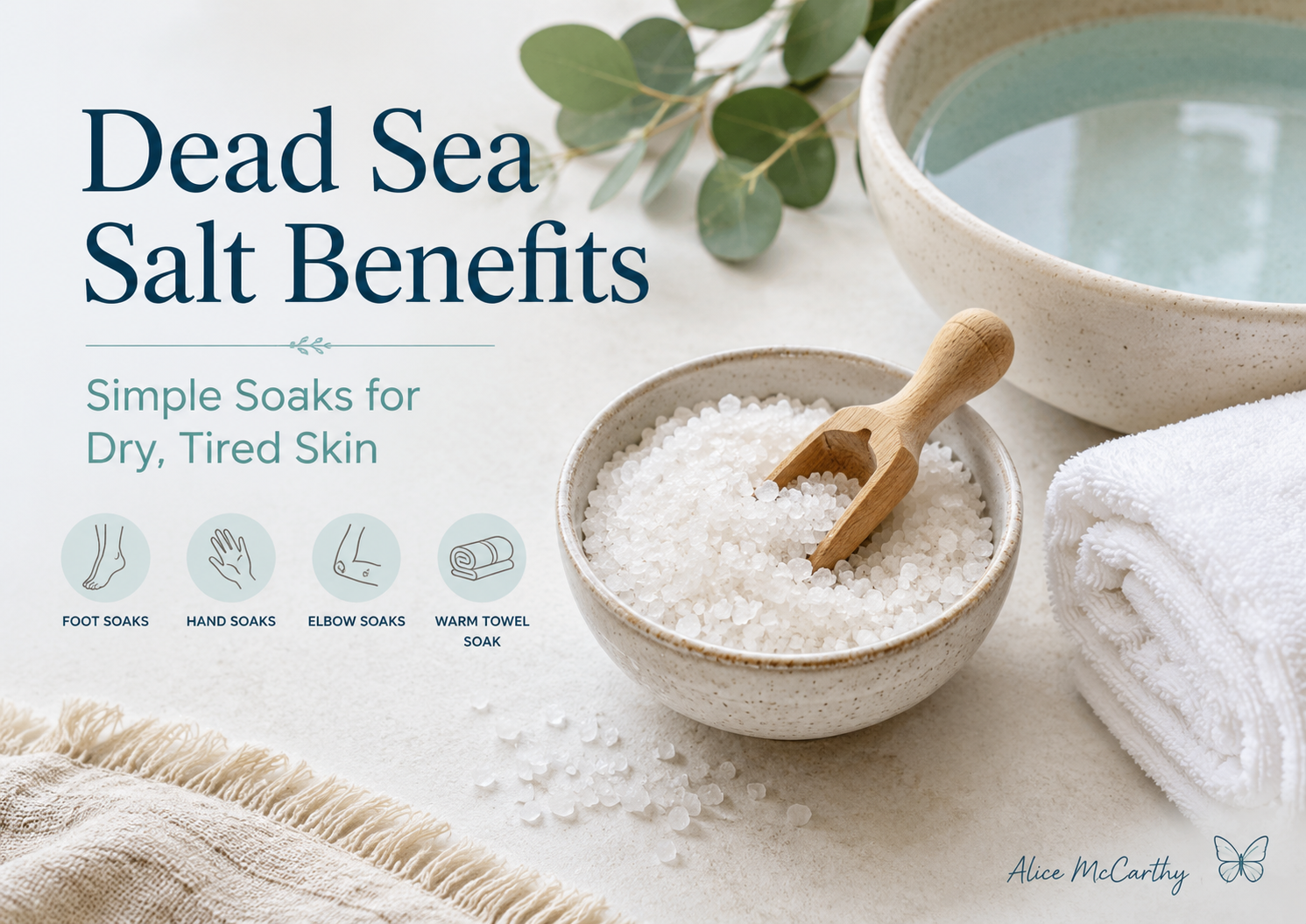
    Dead Sea salt benefits may include softer-feeling skin, improved hydration and a simple way to soothe dry, tired areas of the body.

    But sometimes the biggest benefit is how a soak makes you feel.

    Your feet have carried you all day. Your hands have washed, cleaned, cooked and cared for everyone else. A warm mineral soak can become a small pause—a few quiet minutes to breathe, soften tired skin and let your body slow down.

    You do not need a complicated routine or even a full bathtub. Dead Sea salt can be used in a bath, foot soak, hand soak, elbow soak or warm towel compress.

    I wanted to take a closer look at what Dead Sea salt is, what it may realistically do for the skin and the different ways you can use it at home.

    Because there is a difference between enjoying a helpful wellness product and believing every big claim made about it.

    What Is Dead Sea Salt?

    Dead Sea salt comes from the mineral-rich water of the Dead Sea.

    It is different from ordinary table salt, which is primarily sodium chloride. It is also different from Epsom salt, which is magnesium sulfate.

    Dead Sea salt contains a natural mixture of minerals, including:

    • Magnesium
    • Calcium
    • Potassium
    • Sodium
    • Chloride

    These minerals are one reason Dead Sea salt has become popular in bath, body and skin-care products.

    What Are the Potential Benefits of Dead Sea Salt?

    A warm Dead Sea salt soak may help soften and soothe dry, rough or uncomfortable skin.

    Research using a magnesium-rich Dead Sea salt solution found that regular soaking helped improve skin hydration and the skin’s protective barrier while reducing redness and roughness in people with dry, sensitive skin.

    That does not mean Dead Sea salt cures eczema, psoriasis or other skin conditions. It may, however, be a comforting addition to a gentle skin-care routine for some people.

    A Dead Sea salt soak may help:

    • Soften dry or flaky skin
    • Calm rough-feeling areas
    • Support the skin’s natural moisture barrier
    • Leave skin feeling smoother
    • Comfort tired feet, hands and muscles
    • Create a relaxing end-of-day routine

    And honestly, slowing down for 10 or 15 quiet minutes can have benefits of its own.

    Dead Sea Salt Is Not a Miracle Detox

    Let’s clear up one common claim.

    A mineral bath may feel wonderful, but we do not need to say that it pulls toxins out of the body.

    Our liver, kidneys, lungs and digestive system already handle the body’s natural waste-removal processes.

    Dead Sea salt is better viewed as a mineral-rich bath and skin-care product—not a weight-loss treatment, medical cure or magical detox.

    The real benefits are enough. We do not need to exaggerate them.

    Dead Sea Salt Versus Epsom Salt

    Although people sometimes use the names interchangeably, they are not the same thing.

    Epsom salt is magnesium sulfate.

    Dead Sea salt contains a broader combination of naturally occurring minerals, including magnesium, calcium, potassium and sodium salts.

    Both may be used in a relaxing soak, but Dead Sea salt is especially known for its use in skin-care routines.

    How to Use Dead Sea Salt at Home

    You do not need a full bathtub to enjoy a Dead Sea salt soak.

    Always follow the directions included with the product you purchase. Start with a smaller amount if your skin is sensitive.

    Full-Body Bath

    Fill the tub with comfortably warm—not hot—water.

    Add the recommended amount of Dead Sea salt and allow it to dissolve. Soak for approximately 10 to 15 minutes.

    After your bath, gently pat your skin dry instead of rubbing it. Apply a gentle moisturizer while your skin is still slightly damp.

    Hot water and long baths can make mature or dry skin feel even drier, so more is not always better.

    Foot Soak

    A foot soak can feel especially comforting at the end of a long day. It gives you a reason to sit down, be still and care for the feet that have carried you through everything.

    A foot soak is a simple option after a long day.

    Fill a foot basin or large bowl with comfortably warm water. Add a small amount of Dead Sea salt and stir until it dissolves.

    Soak your feet for approximately 10 to 15 minutes.

    Afterward, dry your feet carefully, especially between your toes, and apply moisturizer to any dry areas.

    Avoid soaking if you have open sores, an infection or painful cracks that may sting.

    Hand Soak

    Our hands do so much every day. A warm hand soak can feel like a small way of giving some of that care back to yourself.

    Our hands can become especially dry from frequent washing, cleaning products and cold weather.

    Dissolve a small amount of Dead Sea salt in a bowl of warm water. Soak your hands for several minutes.

    Rinse if desired, pat dry and apply a rich hand cream or lotion afterward.

    Do not soak deeply cracked, bleeding or freshly irritated skin, because salt may cause burning or stinging.

    Elbow Soak

    Rough elbows can be difficult to soak in a traditional bowl, but a shallow basin or warm compress can work.

    Dissolve the Dead Sea salt in warm water and rest your elbows in the water for several minutes.

    Gently pat them dry and apply moisturizer while the skin is still slightly damp.

    Warm Towel or Washcloth Soak

    A warm towel soak can turn an ordinary evening into a small moment of care, especially for areas that are hard to soak in a bowl.

    You can also create a warm mineral compress for areas that are difficult to place in a bowl.

    First, dissolve the Dead Sea salt completely in a basin of warm water.

    Place a clean washcloth or small towel into the mineral water. Wring out the extra water and lay the warm cloth over the area you want to soak.

    Rewet the towel as needed to keep it comfortably warm.

    Do not place dry, undissolved salt directly inside a towel against your skin. Dissolving it first creates a gentler and more even soak.

    No Bathtub? Create a Shower-Stall Foot Soak

    Having only a shower stall does not mean you cannot enjoy the benefits of a mineral foot soak.

    A removable shower drain cover or flat drain stopper can be placed over the drain to temporarily hold a shallow amount of water.

    Some people place a thick washcloth over the drain to slow the water, but a proper shower drain cover creates a more reliable seal and is less likely to move or clog the drain.

    Add a small amount of comfortably warm water and dissolve the Dead Sea salt before stepping into the shower.

    You only need enough water to cover the bottoms of your feet.

    Use extra caution because salt and bath products may make the shower floor slippery. Hold onto a stable support when stepping in or out, and never allow the shower stall to overflow.

    After your soak, remove the drain cover, rinse the shower floor thoroughly and apply moisturizer to your feet.

    You can also place a basin directly inside the shower stall and use that for your foot soak. This may be the easiest and safest option.

    Important Safety Reminders

    Dead Sea salt may sting when used on:

    • Open cuts
    • Cracked or bleeding skin
    • Freshly shaved skin
    • Broken or severely irritated skin
    • Active skin infections

    Start with a smaller amount if you have sensitive skin.

    Stop using it if you experience burning, increased redness, swelling or continued irritation.

    Anyone with diabetes, poor circulation, reduced sensation in the feet, a serious skin condition or another medical concern should speak with a healthcare professional before starting a new soaking routine.

    Also check the full ingredient label.

    Pure Dead Sea salt is one thing. Added fragrances, dyes and essential oils are another. Those extra ingredients may irritate sensitive skin.

    Sometimes self-care is not about doing more. It is about slowing down long enough to notice what your body needs.

    Dead Sea salt benefits do not need to be exaggerated to be worthwhile. A simple soak may help dry, tired skin feel softer while giving you a few quiet minutes to reset.

    A Simple Self-Care Opportunity

    One of the wellness companies I shop with currently has its large bag of Dead Sea salt available for $30 through July 15, 2026.

    Smaller bags are normally available throughout the year, but this larger size is a limited-time special.

    I like that Dead Sea salt gives you several options.

    You can enjoy a full bath, soak tired feet, soften your hands and elbows, use a warm towel compress or create a simple foot soak in your shower stall.

    No complicated routine.

    No big promises.

    Just warm water, mineral-rich salt and permission to slow down for a few minutes.

    For information about the large bag or help ordering it, you can reach out to me privately.

    This article is for general educational purposes and is not medical advice. Individual results and skin reactions may vary.
    Disclosure: I may earn a commission when you purchase through me, at no additional cost to you.

  • Low Glycemic vs GLP-1: What Women Over 50 Should Know

    Low Glycemic vs GLP-1: What Women Over 50 Should Know

    Low Glycemic vs GLP-1: What Is the Difference?

    GLP-1 medications are everywhere right now. Some women are getting great results. Others are concerned about side effects, cost or what may happen if they stop taking them.

    At the same time, many women are improving their health through food, movement and better daily habits.

    It can feel like we are supposed to choose a side.

    Medication or lifestyle.

    Natural or medical.

    Doing it the “right way” or taking the “easy way.”

    I do not believe it needs to be that way.

    A low-glycemic lifestyle and GLP-1 medication are not the same thing, but they do not have to be enemies either.

    How a Low-Glycemic Lifestyle Works

    A low-glycemic lifestyle focuses on foods that generally have a gentler effect on blood sugar.

    For me, that means building meals around protein, vegetables, fiber, healthy fats and lower-glycemic carbohydrates.

    I do not count calories.

    I eat to hunger and focus on foods that help me feel steady, satisfied and in control.

    This is not about fearing carbohydrates or eating as little as possible. It is about making choices that work well with my body.

    Since following this lifestyle, I have noticed that much of my food noise has quieted down.

    I am not constantly thinking about cookies, cakes and candy.

    Now, let me be real.

    I remember how good those foods taste. I also know myself well enough to understand that one cookie can sometimes lead to more—or even the whole package.

    That is not weakness.

    That is knowing myself and making choices that work with what I know.

    What Is a GLP-1?

    GLP-1 medications can affect appetite, fullness, digestion and blood-sugar control.

    They may help some people:

    • Feel less hungry
    • Become full sooner
    • Experience less food noise
    • Improve blood-sugar control
    • Lose a meaningful amount of weight

    These are real medications used for real medical reasons.

    Taking one is not cheating.

    For some people living with obesity, type 2 diabetes or certain weight-related conditions, a GLP-1 may be an appropriate tool.

    That decision belongs between the individual and a qualified healthcare professional.

    However, medication does not automatically teach someone how to build a balanced meal, protect muscle or create habits that last.

    That is why lifestyle still matters.

    The Biggest Difference

    A low-glycemic lifestyle is something you practice.

    A GLP-1 is something you take.

    One builds daily habits. The other changes certain signals within the body.

    Both may affect hunger, blood sugar and weight, but they work differently.

    Here is how I see it:

    Lifestyle is the foundation. Medication may be an additional tool when it is medically appropriate.

    Even when someone uses a GLP-1, she still needs protein, water, movement and strength-building activity.

    The medication may make some choices easier, but it does not make healthy habits unnecessary.

    No matter which approach someone chooses, lasting results still depend on the habits we practice repeatedly. I shared more about this in my post on building healthy habits that stick.

    Is Using a GLP-1 Cheating?

    No.

    We need to stop acting as though someone earns a prize for struggling the hardest.

    Taking medication is not a moral failure.

    Choosing not to take medication does not make someone better than someone who does.

    Some women may need medical support. Others may find that changing how they eat reduces hunger and cravings without medication.

    There is room for both stories.

    Why Muscle Matters After 50

    For women over 50, the goal cannot only be making the number on the scale smaller.

    We also need to protect our strength.

    That means eating enough protein and including some type of resistance movement.

    It does not have to be complicated.

    Wall push-ups, squats, modified planks, resistance bands or light weights all count.

    Strong matters.

    Energy matters.

    Being able to climb stairs, carry groceries and keep up with the grandchildren matters.

    Health is bigger than being smaller.

    What Is Working for Me

    Right now, I am choosing a low-glycemic lifestyle.

    I focus on protein, lower-glycemic foods, simple movement and eating to hunger.

    My cravings have changed.

    My food noise has quieted.

    I feel more in control without feeling like I am constantly fighting myself.

    That does not mean my way is the only way.

    Your health history, hormones, medications and lifestyle may be completely different from mine.

    No two journeys are exactly the same.

    Helpful Low-Glycemic Resources

    I do not think we need a shelf full of diet books. A few useful resources are enough.

    Low-GI and Gluten-Free Guidance

    The New Glucose Revolution: Low GI Gluten-Free Eating Made Easy by Jennie Brand-Miller, Kate Marsh and Philippa Sandall includes low-GI education, gluten-free guidance and recipes.

    View the Jennie Brand-Miller book on Amazon

    A Simple No-Calorie-Counting Approach

    Living the G.I. Diet by Rick Gallop uses a simple traffic-light system for food choices.

    I like that because I do not count calories either. I prefer lower-glycemic foods, eating to hunger and building a lifestyle I can continue.

    View Living the G.I. Diet on Amazon

    A Quick Kitchen Reference

    A laminated glycemic-index chart can be helpful when comparing foods or planning meals.

    I would use it as a guide, not as a list of “good” and “bad” foods.

    View a Glycemic Index Reference Chart on Amazon

    As an Amazon Associate, I earn from qualifying purchases. This does not change the price you pay.

    My Honest Bottom Line

    I do not believe women should be shamed for using GLP-1 medication.

    I also do not believe medication replaces learning how to care for ourselves.

    A low-glycemic lifestyle may be enough for some women. Others may benefit from medication along with lifestyle changes.

    The best choice is the one that is safe, medically appropriate and sustainable for your real life.

    Know your body.

    Know your patterns.

    Ask good questions.

    Then build habits that will still matter after the excitement of a new plan wears off.

    Because the goal is not simply to lose weight.

    The goal is to create a healthier life you can actually keep living.

    This post shares my personal experience and is for general educational purposes only. It is not medical advice. Speak with a qualified healthcare professional before beginning, stopping or changing any prescription medication.

  • Habits That Stick Start With Identity

    Habits That Stick Start With Identity

    I have been thinking a lot about habits that stick lately.

    Not the kind where you make a big plan on Monday, mess up by Wednesday, and decide you already failed.

    I mean the kind of habits that slowly become part of who you are.

    I have been listening to Atomic Habits by James Clear again. I have read it before. I have listened before. However, this time something clicked differently.

    Maybe it is because I am in a different season of life.

    Maybe it is because I am finally understanding that habits are not just about what we do.

    They are also about who we believe we are becoming.

    Why Habits That Stick Start With Identity

    I know how to lose weight.

    I know what foods help me feel better.
    I know movement matters.
    I know protein helps.
    I know consistency works.

    However, knowing what to do is not always the same as becoming the person who does it.

    That has been the piece I am seeing more clearly now.

    For a long time, my weight went up and down because my habits changed for a season, but my identity did not fully change with them.

    I could lose the weight.
    I could follow the plan.
    I could get results.

    But if deep down I still saw myself as someone who always goes back, then eventually I would.

    That is hard to admit.

    However, it is also freeing.

    Because once you see it, you can work on it.

    My Old Identity Kept Me in the Same Cycle

    I used to be over 200 pounds.

    And for a long time, that was part of how I saw myself.

    Lose weight.
    Gain it back.
    Start again.
    Get frustrated.
    Try harder.
    Repeat.

    That cycle can become an identity without us even realizing it.

    It is not just, “I gained weight.”

    It becomes:

    “This is what I do.”
    “This is who I am.”
    “I always go back.”

    And when that belief sits underneath everything, habits feel harder to keep.

    Not because we are lazy.

    Not because we do not care.

    But because we are trying to live from a new routine while still carrying an old identity.

    Losing 80 Pounds Changed More Than My Weight

    After losing 80 pounds, I did change.

    I was no longer the woman who felt stuck in the 200-pound range.

    My identity shifted.

    I started to see myself as a woman who could live in the 150-pound range.

    That may not sound like a big deal to some people, but for me, it was huge.

    It meant I was no longer living from the old story.

    I had proof that change was possible.

    I had proof that I could show up for myself.

    Also, I had proof that small choices repeated over time really do matter.

    That is how habits that stick begin to form.

    They become evidence.

    Now I Am Working on the Next Identity

    My lowest weight was 133.

    I felt great there.
    I felt strong.
    I felt proud of myself.
    I thought I looked awesome.

    Some people told me I looked too thin. Honestly, that can mess with your head too.

    So now, I am not trying to chase skinny.

    I am not trying to prove anything.

    Instead, I am working on becoming the woman who lives around 140 pounds in a healthy, steady, peaceful way.

    Not through obsession.
    Not through punishment.
    Not through starting over every Monday.

    Through identity.

    Through habits.

    Through becoming the kind of woman who takes care of herself because that is who she is.

    The Identity Has to Match the Habit

    This is the part that stands out to me.

    If I want habits that stick, I cannot only say, “I am trying to lose weight.”

    Instead, I need to begin thinking:

    “I am a woman who moves daily.”
    “I am a woman who eats in a way that supports her body.”
    “I am a woman who chooses protein because it helps me feel steady.”
    “I am a woman who does not quit when one day is messy.”
    “I am a woman who keeps promises to herself.”

    That identity matters.

    Because when your identity changes, your choices start to line up with it.

    Not perfectly.

    But more consistently.

    And consistency is what changes a life.

    This Is Not About Perfection

    I still like treats.

    I still have days where I do not eat the way I planned.

    Also, I still have moments where I want the easy thing, the sweet thing, or the comfort thing.

    So this is not about pretending I have it all figured out.

    It is about telling the truth.

    If I want lifelong health, I need lifelong habits.

    And if I want lifelong habits, I need an identity that supports them.

    That is the difference.

    A plan can get you started.

    However, identity is what helps you stay.

    Small Habits Become Evidence

    Every time I move my body, I am giving myself evidence.

    Every time I choose a meal that supports me, I am giving myself evidence.

    When I drink my water, get back on track, pause before eating out of stress, or choose protein first, I am giving myself evidence.

    The evidence says:

    “This is who I am now.”

    Not because I said it once.

    But because I am living it in small ways.

    That is where change becomes real.

    That is where habits that stick become part of your life.

    Maybe This Is Your Reminder Too

    Maybe you are not trying to lose weight.

    Maybe you are trying to become more peaceful.
    Maybe you are trying to move more.
    Maybe you are trying to eat in a way that supports your body.
    Maybe you are trying to stop quitting on yourself.
    Maybe you are trying to believe it is not too late.

    Whatever it is, start with this question:

    Who do I need to become for this habit to feel natural?

    Not perfect.

    Natural.

    Because lasting change is not just about forcing yourself to do better.

    It is about slowly becoming the kind of person who lives differently.

    A Book That Helped Me Think Differently

    One book that has helped me understand habits and identity in a deeper way is Atomic Habits by James Clear.

    A Little Note About Links

    Some links on this page may be affiliate links. That means I may earn a small commission if you choose to purchase through them, at no extra cost to you. I only share things I personally look for, use, or believe may be helpful for simple healthy living.

    I have read it and listened to it before, but this time I am hearing it differently.

    That is the beautiful thing about growth.

    Sometimes you can hear the same truth in a new season, and it lands in a whole new way.

    If you want to check it out, look at the link above.

    Final Thoughts on Habits That Stick

    I am still changing.

    I have changed a lot, but I am still becoming.

    And maybe that is the whole point.

    We do not need to become a whole new person overnight.

    Instead, we keep choosing small habits that agree with the woman we are becoming.

    For me, that means I am no longer the woman who always goes back.

    I am becoming the woman who keeps going.

    One choice.
    One habit.
    One identity shift at a time.