Category: Healthy Living After 50

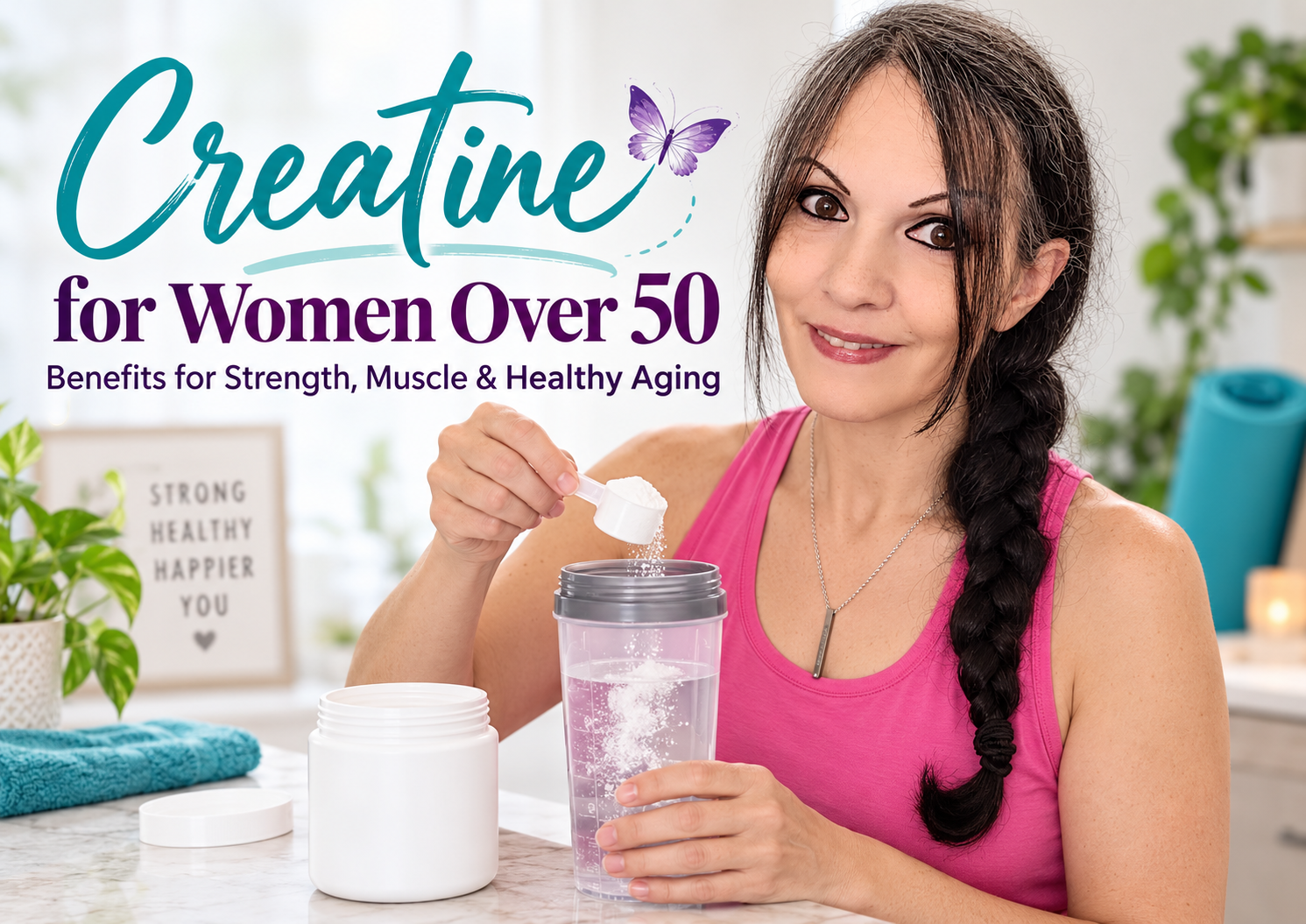
  • Creatine for Women Over 50: Benefits for Strength, Muscle and Healthy Aging

    Creatine for Women Over 50: Benefits for Strength, Muscle and Healthy Aging

    When you hear the word creatine, what comes to mind?

    For years, I associated creatine with bodybuilders, heavy weights, and people spending hours at the gym.

    I certainly didn’t think of women in their 50s, 60s, and beyond.

    But the more I’ve learned about healthy aging and maintaining muscle, the more I’ve realized that creatine deserves a closer look.

    At 61, my goal isn’t to be skinny. My goal is to be strong, healthy, and capable of doing the things I love for years to come.

    I’ve exercised on and off for much of my life, so strength training isn’t completely new to me. But recently, I’ve become much more intentional about building and maintaining muscle.

    I started taking creatine monohydrate in August, and I’ve been taking 5 grams every day while continuing my strength training at home.

    I’ve noticed muscle definition, especially in my arms. Is that from lifting weights, creatine, or both?

    Most likely, my training deserves much of the credit, with creatine potentially helping me get more out of it.

    Let’s talk about what creatine actually does and why women over 50 might want to understand it.

    What Is Creatine?

    Creatine is a natural compound our bodies make from amino acids. It’s also found in foods such as meat and fish.

    Most of our body’s creatine is stored in our muscles, where it helps provide quick energy during activities such as lifting weights, climbing stairs, or doing short bursts of intense exercise.

    Creatine monohydrate is the most widely researched form available as a supplement.

    And despite what many people think, it isn’t a steroid or a hormone.

    It’s simply one tool that may support muscle performance.

    Why Is Creatine Important for Women Over 50?

    As we age, we naturally become more vulnerable to losing muscle mass and strength.

    This age-related muscle loss can affect everyday life in ways we might not think about until simple activities become more difficult.

    Carrying groceries, getting up from the floor, walking stairs, playing with grandchildren, and maintaining our balance all require muscle strength.

    And here’s something I believe strongly:

    We shouldn’t wait until we’re struggling to make strength a priority.

    Strength training, adequate protein, proper nutrition, and consistent movement are the foundation.

    Creatine may offer additional support.

    5 Potential Benefits of Creatine After 50

    1. Creatine May Help Improve Muscle Strength

    This is one of the best-supported benefits.

    Creatine helps your muscles replenish energy during challenging exercises.

    When combined with resistance training, research suggests it can provide modest additional improvements in strength for older adults.

    That doesn’t mean taking creatine alone will give you stronger arms.

    You still have to challenge your muscles.

    But it may help you get a little more out of the work you’re already doing.

    2. Creatine May Support Muscle Development

    Muscle isn’t just about appearance.

    Muscle helps support our metabolism, movement, and physical independence.

    Creatine may help support muscle development when paired with strength training, although research doesn’t consistently show extra muscle growth in every older adult.

    For me, it’s about maintaining the muscle I’ve worked to build over the years.

    I don’t want to lose strength simply because I’m getting older.

    3. Creatine May Help With Workout Performance

    Have you ever reached the end of a set of exercises and felt like you had absolutely nothing left?

    Creatine supports the energy system your muscles use for short, demanding efforts.

    That can sometimes mean completing another repetition or maintaining better performance during your workout.

    Over weeks and months, those small improvements can add up.

    And no, you don’t have to be lifting extremely heavy weights to benefit from strength training.

    Consistency and proper form matter more than trying to impress anyone.

    4. Creatine May Support Brain Health

    This is an area of research I find especially interesting.

    Scientists are studying whether creatine can support memory, attention, and other aspects of cognitive performance as we age.

    Some findings are encouraging.

    However, the research is still developing, and we don’t yet have enough evidence to say that taking creatine will prevent cognitive decline or improve memory for everyone.

    It’s an interesting potential benefit, but not something I would promise.

    5. Creatine May Help Support Healthy Aging

    For me, this is the bigger picture.

    I want to stay active.

    I want to maintain my independence.

    I want to enjoy my grandchildren and continue doing everyday activities without feeling limited by a lack of strength.

    Creatine isn’t a magic solution for aging.

    But alongside regular strength training and other healthy habits, it may be a useful addition.

    How Much Creatine Should Women Over 50 Take?

    A commonly studied maintenance amount is 3–5 grams of creatine monohydrate daily.

    I personally take 5 grams every day, including the days I don’t work out.

    You don’t have to take creatine immediately before exercise.

    Consistency matters more than timing because creatine works by gradually increasing the amount stored in your muscles.

    You also don’t need to start with a high loading dose.

    Taking a regular daily amount can build muscle creatine stores over several weeks.

    Anyone with kidney disease or other significant medical concerns should speak with their healthcare provider before beginning supplementation.

    How Long Does Creatine Last in Your Body?

    This was something I wanted to understand myself.

    Creatine isn’t like drinking a cup of coffee and feeling an immediate burst of energy.

    Instead, your muscles gradually build up creatine stores with consistent supplementation.

    Once those stores are elevated, they remain available to help support muscle energy production.

    If you stop taking creatine, your elevated muscle stores generally return toward their previous levels over about four to six weeks.

    That’s why regular daily use is more important than choosing a perfect time of day.

    How Long Can You Leave Creatine Mixed in Water?

    Another common question is whether creatine needs to be consumed immediately after mixing it with water.

    Creatine monohydrate slowly breaks down into creatinine after being dissolved.

    However, that process isn’t immediate.

    For everyday use, mixing it and drinking it within a few hours is a simple approach.

    If you’re preparing a drink to take to work, keeping it refrigerated or cool is a good idea.

    Avoid leaving it sitting in a hot car or warm environment for long periods.

    Freshly mixed is ideal, but there is no need to panic if you don’t drink it right away.

    Does Creatine Make You Gain Weight?

    This is particularly important for women who are watching the number on the scale.

    Creatine can increase the amount of water stored inside your muscles.

    That means some people notice a small increase in body weight when they begin taking it.

    That increase doesn’t automatically mean you’ve gained body fat.

    I’ve spent enough years paying attention to the scale to know how easily a number can affect our mindset.

    But the scale doesn’t tell the entire story.

    Your strength, muscle definition, measurements, energy, and how you feel matter too.

    If you’re interested in understanding why the scale sometimes changes unexpectedly, read my article:

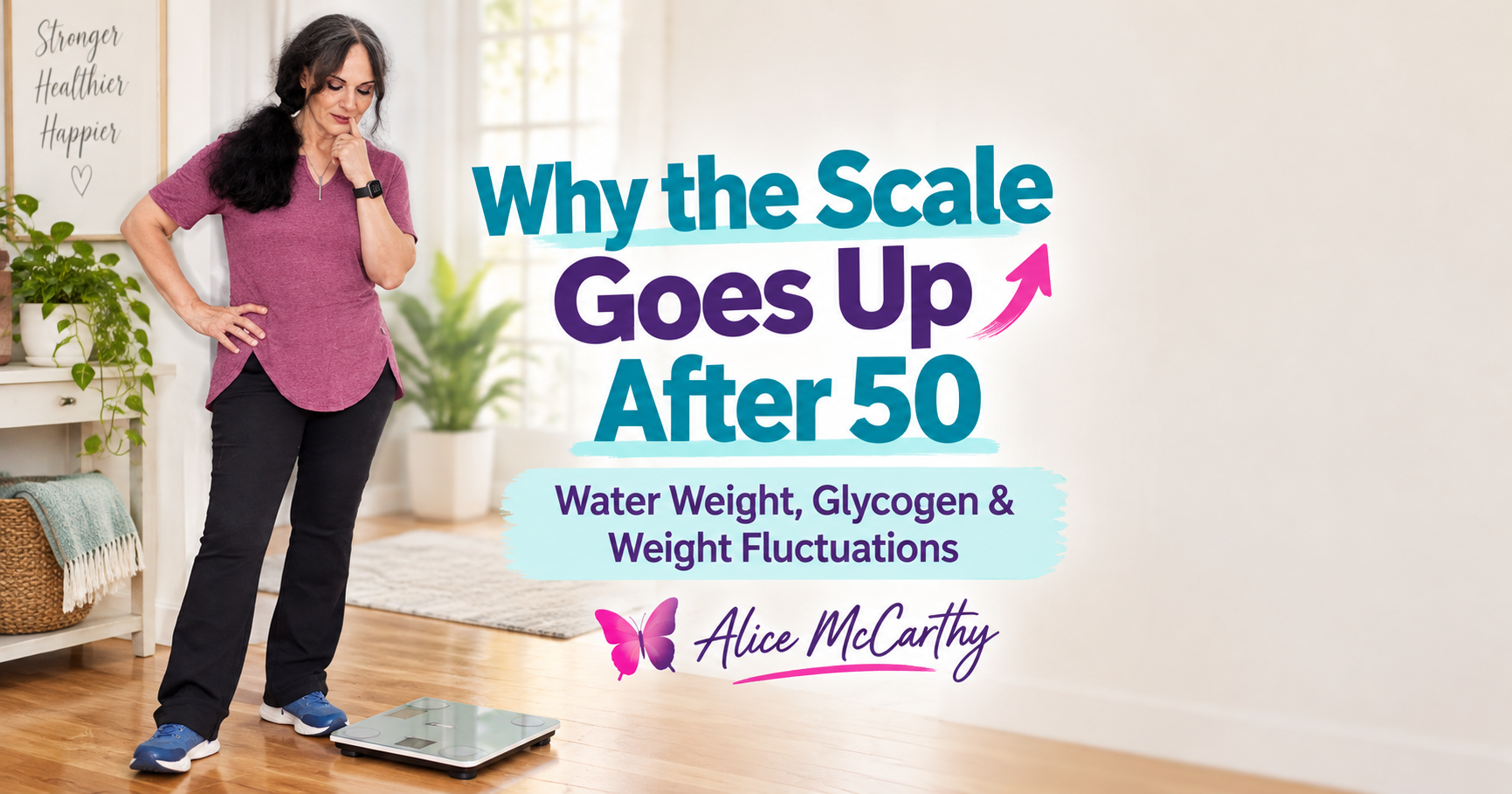
    Why the Scale Goes Up After 50: Understanding Water Weight and Glycogen

    Is Creatine Safe for Women Over 50?

    Creatine monohydrate is one of the most extensively studied sports supplements.

    Research generally supports its safety at typical daily amounts for healthy adults.

    However, that doesn’t mean it’s appropriate for everyone.

    Some people experience bloating or digestive discomfort, especially with larger doses.

    Anyone with kidney disease, abnormal kidney function, or relevant medical concerns should discuss creatine with their healthcare provider.

    Quality matters, too. Choose a reputable product, preferably one that has undergone independent third-party testing.

    And remember, supplements should support healthy habits, not replace them.

    My Personal Experience With Creatine and Strength Training

    I’ve been exercising on and off for years, so I’ve had muscle definition before.

    But this season of my life feels different.

    I’m not exercising because I’m unhappy with my body.

    I’m exercising because I want to take care of it.

    I’m lifting weights at home three days a week, working on my arms, legs, and overall strength.

    Some workouts feel easier than others. Some days I have more energy. And some days I need to adjust.

    That’s real life.

    I started taking 5 grams of creatine daily in August.

    I’ve noticed definition in my arms, but I can’t honestly say how much is from creatine and how much is from my training.

    And that’s okay.

    I don’t need to give a supplement credit for what consistency, effort, and years of movement have helped me build.

    Creatine may be helping, but I’m the one showing up for those workouts.

    Do You Really Need Creatine After 50?

    No. Creatine isn’t something every woman must take.

    You can absolutely build strength without it.

    What matters most is finding habits you can maintain.

    Move your body.

    Challenge your muscles.

    Eat nourishing food.

    Get adequate protein and rest.

    And be willing to learn about tools that might support your goals.

    If you’re new to strength training, you might also enjoy:

    Building Muscle to Be Strong as We Age

    Final Thoughts: Strong, Not Skinny

    One thing I’ve learned over the years is that our health journey changes as we age.

    At one time, I focused far too much on what the scale said.

    Today, I care much more about what my body can do.

    Can I lift what I need to lift?

    Can I move comfortably?

    Am I maintaining my strength?

    Am I taking care of the body I have instead of constantly trying to make it smaller?

    Those are the questions that matter to me.

    Creatine may be one useful piece of the puzzle.

    But it’s not the foundation.

    The foundation is showing up for yourself, building sustainable habits, and understanding that being strong after 50 is something worth working toward.

    And personally, I think that’s a much better goal than chasing a number on the scale.

    With encouragement,

    Alice McCarthy


    Disclaimer: This article shares my personal experience and general educational information. It is not medical advice. Always speak with a qualified healthcare professional about supplements and individual health concerns.
  • Three Months, Three Holidays: Enjoy the Season Without Losing Your Progress After 50

    Three Months, Three Holidays: Enjoy the Season Without Losing Your Progress After 50

    I love this time of year!

    October, November, and December. Three months filled with holidays, family, traditions, and some really good food.

    Halloween, Thanksgiving, and Christmas.

    But here’s something I’ve learned along my own health journey.

    Three holidays don’t have to turn into three months of putting our health on the back burner.

    And for women over 50, this is something worth thinking about before the holiday season gets into full swing.

    Now Is the Time to Build Muscle, Not Excuses

    One of the best things we can do for ourselves as we age is build and maintain muscle.

    I’m not talking about becoming a bodybuilder or spending hours at the gym.

    I’m talking about getting stronger.

    Having the strength to carry groceries, pick up our grandkids, enjoy the things we love, and remain independent as we get older.

    Muscle also helps our bodies use glucose and supports our metabolism.

    That’s why I’m continuing to work on building muscle through strength training.

    Not because Thanksgiving dinner is coming.

    Not because I need to earn my Christmas cookies.

    But because the stronger I become, the better I’m taking care of the body I have today and the body I’ll have ten years from now.

    And that matters to me.

    I’ve also shared more about building muscle and why strength training matters as we age in another article on my blog.

    It’s Three Holidays, Not Three Months

    Think about it.

    Halloween is one day.

    Thanksgiving is one day.

    Christmas is one day.

    That’s three holidays spread across three months.

    Of course, there are other celebrations, parties, leftovers, and family gatherings mixed in.

    But here’s my point.

    We don’t have to treat the entire season like one long holiday meal.

    We can enjoy the foods we love without making every single day an occasion to overindulge.

    And we don’t have to give up the traditions that make this season special.

    I fully intend to enjoy my favorite holiday foods!

    But I also know how easy it is for one day of enjoying ourselves to turn into a week, then a month, and before we know it, January is here.

    I’ve been there.

    Healthy Holidays After 50: Set Your Standards Before the Holidays Arrive

    Here’s something I want you to think about.

    What standards are you setting for yourself this holiday season?

    Not restrictions.

    Not another diet.

    Standards.

    There is a difference.

    Restrictions tell us everything we can’t have.

    Standards remind us of what matters to us and how we want to take care of ourselves.

    For me, that means:

    • Continuing my strength training instead of putting it off until January.
    • Eating balanced meals and enjoying holiday favorites without guilt.
    • Moving my body regularly, even when life gets busy.
    • Paying attention to how I feel rather than focusing only on the scale.
    • Remembering that one meal doesn’t determine my progress.

    And most importantly, not allowing one choice to become an excuse to give up on the rest of the day.

    Because that’s where so many of us have struggled.

    We eat something that wasn’t part of our usual routine, decide we’ve ruined everything, and tell ourselves we’ll start again Monday.

    Or worse, January.

    We don’t have to live that way anymore.

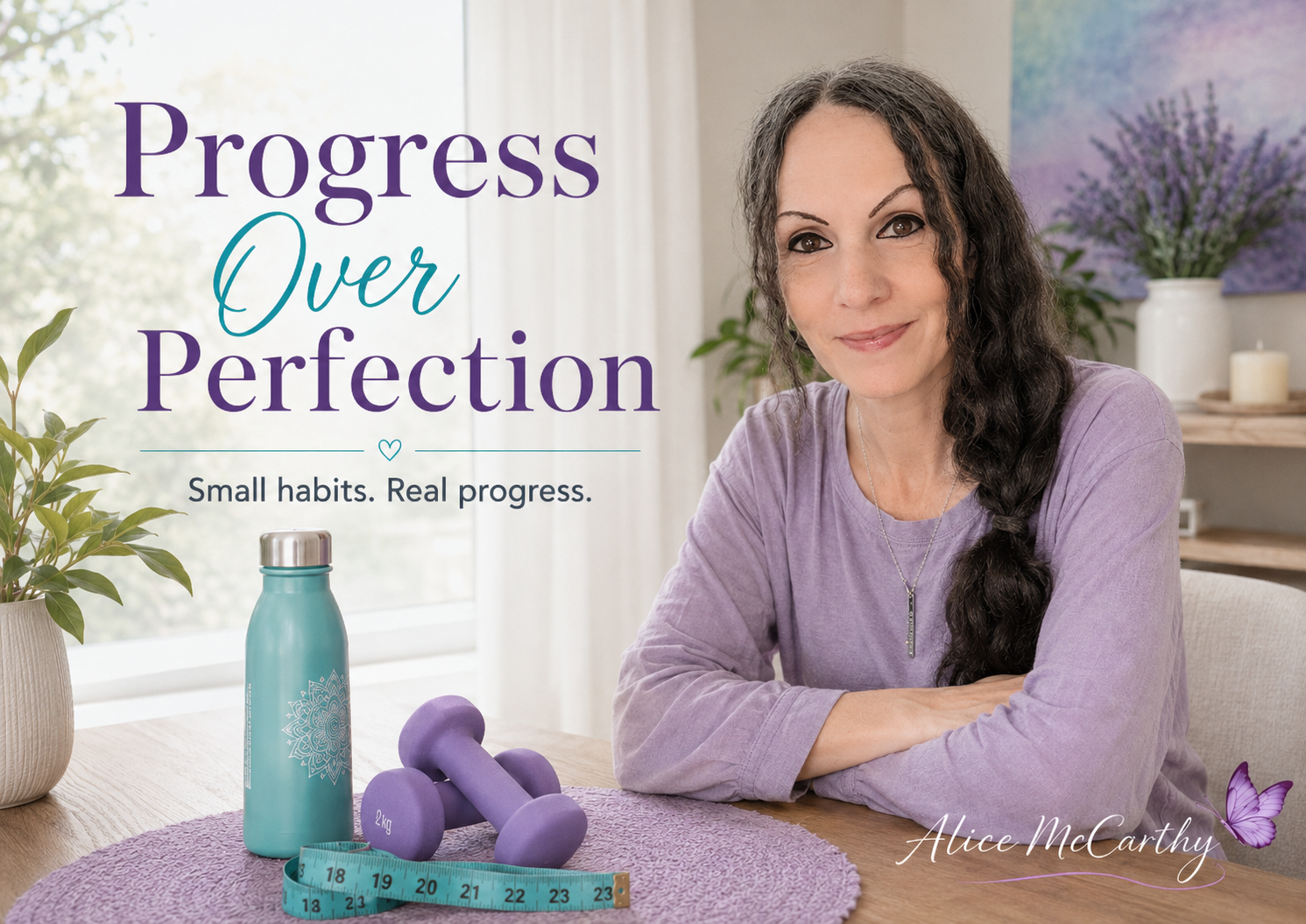
    I’ve talked about this in my article, Healthy Progress After 50, because real progress isn’t about perfection. It’s about the habits we build and the choices we continue making.

    Enjoy the Food. Enjoy Your Family. Enjoy Your Life.

    I want to be present when I’m spending time with my family.

    I want to enjoy Thanksgiving dinner.

    I want to enjoy Christmas traditions with my grandkids.

    And yes, if there’s something I really love on the table, I’m going to enjoy it.

    I’m not interested in spending the holidays counting every bite or feeling guilty about a piece of dessert.

    But I also don’t want to spend three months forgetting about the habits I’ve worked hard to build.

    There is room for both enjoyment and taking care of ourselves.

    That’s the balance I’m learning.

    And it’s something I wish I had understood years ago.

    What Do You Want January to Look Like?

    Imagine waking up on January 1.

    Instead of looking in the mirror and thinking about everything you need to undo, imagine feeling proud of yourself.

    Not because you ate perfectly.

    Not because the scale showed a certain number.

    But because you kept showing up for yourself.

    You enjoyed the holidays.

    You spent time with the people you love.

    You kept moving.

    You continued building strength.

    And you didn’t abandon yourself just because the calendar said it was the holiday season.

    And if the scale does go up after enjoying some holiday meals, don’t automatically assume you’ve gained body fat.

    Our bodies can hold extra water, especially after eating more carbohydrates or sodium than usual.

    I explain this in my article, Why the Scale Goes Up After 50: Understanding Water Weight and Glycogen.

    Understanding how our bodies work can make such a difference in how we respond to that number.

    That’s the kind of progress I want.

    My Holiday Reminder to Women Over 50

    You don’t need to wait until January to take care of yourself.

    You can start today.

    Lift those weights. Take that walk. Enjoy a good meal. Laugh with your family. Make memories with your grandkids.

    Have the Christmas cookie if you want it.

    Then continue with the habits that help you feel your best.

    Because our health isn’t built during three perfect months, and it isn’t undone by three holiday meals.

    It’s built through the choices we make consistently, throughout the entire year.

    This holiday season, I’m choosing strength, balance, and memories.

    Not perfection.

    And I hope you will too.

    — Alice McCarthy

    Simple Wellness After 50 | Strong, Not Skinny

  • What Is Harder: Losing the Weight or Keeping It Off?

    What Is Harder: Losing the Weight or Keeping It Off?

    Why maintaining weight loss after 50 is about more than willpower, diets, or the number on the scale.

    What is harder: losing the weight or keeping it off?

    If you’ve ever lost weight, celebrated reaching a goal, and then watched some of those pounds return, you probably have an opinion.

    I certainly do.

    I’ve experienced both sides of this journey. I’ve lost over 80 pounds, felt amazing about my progress, and then experienced weight regain.

    And I learned something that changed how I look at my health.

    Losing weight and maintaining weight loss are two very different challenges.

    One has a finish line in sight. The other requires learning how to live without one.

    Losing Weight Gives You Something to Chase

    Think about the beginning of a weight loss journey.

    You’re motivated. You’ve made a decision. Maybe you bought healthier groceries, started moving more, or finally decided that your health needed to become a priority.

    Then the scale starts moving.

    Five pounds. Ten pounds. Twenty pounds.

    Your clothes fit differently. You have more energy. People begin noticing.

    Those little victories keep you going.

    Of course, losing weight isn’t easy. It takes patience, consistency, and learning how to change habits you’ve probably had for years.

    But here’s something we don’t talk about enough.

    What happens when the excitement wears off?

    What happens when you’ve reached your goal and there isn’t another number you’re trying to reach?

    That’s when a different kind of work begins.

    Keeping the Weight Off Means Changing Your Lifestyle

    I think this is where so many of us struggle.

    We spend months or years learning how to lose weight, but how much time do we spend learning how to maintain it?

    We tell ourselves that once we reach a certain number, everything will be easier.

    We’ll finally be able to relax.

    But life doesn’t suddenly become less busy.

    There are still family dinners, holidays, birthdays, stressful days, sleepless nights, and homemade macaroni and cheese.

    And yes, sometimes there are brownies.

    I know because I’ve been there.

    I’ve made choices that didn’t support my goals. I’ve enjoyed foods that I knew were richer than what I normally eat.

    Sometimes I’ve eaten more than I intended.

    But the difference today is how I respond.

    I don’t need to punish myself the next morning.

    I don’t need to skip meals.

    And I certainly don’t need to throw away all the progress I’ve made.

    I simply return to the habits that helped me become healthier in the first place.

    Why Maintaining Weight Loss After 50 Can Feel Harder

    There’s another part of this conversation that deserves attention.

    Our bodies change as we age.

    Muscle mass can decline, especially when we aren’t doing anything to preserve it. Hormonal changes, sleep patterns, activity levels, and medications can also influence weight management.

    In addition, after weight loss, our bodies generally require less energy at a lower weight. Changes in appetite can make maintenance more challenging, too.

    So if you’ve noticed that maintaining your weight after 50 feels different than it did in your thirties, there may be real reasons.

    But that doesn’t mean we give up.

    It means we become smarter about how we care for ourselves.

    For me, strength training has become an important part of that.

    I’m no longer exercising simply because I want to see a smaller number.

    I’m lifting weights because I want to be stronger.

    I want to maintain my muscle, stay active, and continue doing the things I enjoy as I get older.

    And I’ve learned that eating enough to support my body matters just as much as making nutritious choices.

    My goal today is to be strong, not skinny.

    The Scale Can Mess With Your Mind If You Let It

    Recently, I stepped on the scale after enjoying a few days of comfort foods.

    The number had jumped about four pounds.

    Years ago, that would have affected my entire day.

    I probably would have avoided the scale because I didn’t want to face the number.

    But this time, I stepped on it knowing exactly what I’d been eating.

    I owned my choices.

    And I understood something important.

    Not every pound that appears overnight is body fat.

    Changes in carbohydrates, sodium, digestion, and water retention can temporarily affect the number on the scale.

    That’s why learning how your body works is so valuable.

    Instead of panicking, I looked at the bigger picture.

    My measurements hadn’t changed.

    I was still strength training.

    And the habits I’d built were still there.

    That one number didn’t erase my progress.

    If you’d like to understand this better, read my article Why the Scale Goes Up After 50: Understanding Water Weight and Glycogen.

    The Old Habits Don’t Always Disappear

    Here’s something I’ve learned about lasting change.

    Old habits have a way of showing up when you least expect them.

    Maybe you’re tired.

    Maybe you’re stressed.

    Maybe something tastes really good, and you keep going back for more.

    It happens.

    But there’s a difference between enjoying something occasionally and allowing an old pattern to become your everyday routine again.

    That’s why I believe lasting wellness begins with awareness.

    You have to recognize what you’re doing without turning it into a judgment about who you are.

    One meal doesn’t define your health.

    One weekend doesn’t undo your hard work.

    And one difficult season doesn’t mean you’ve failed.

    What matters is the pattern you return to.

    What Actually Helps Me Maintain My Progress?

    I don’t believe we need complicated routines to stay healthy.

    What we need are habits that fit the lives we’re living.

    For me, those include:

    • Strength training. Building and maintaining muscle matters more to me now than chasing a smaller clothing size.
    • Eating satisfying meals. I focus on protein, vegetables, fiber, and foods I actually enjoy.
    • Moving regularly. Not every movement has to be a workout. Walking and staying active count, too.
    • Understanding my body. The scale is one tool, but how I feel, my strength, and my measurements matter.
    • Giving myself grace. I can enjoy a special meal without turning it into guilt.
    • Staying consistent. I don’t have to make perfect choices. I need habits I can keep returning to.

    And perhaps the most important lesson?

    I stopped thinking about health as something I would eventually finish.

    It’s something I get to work on for the rest of my life.

    Maybe We’ve Been Asking the Wrong Question

    We spend so much time asking:

    How can I lose the weight?

    How quickly can I reach my goal?

    What should I stop eating?

    But what if we started asking different questions?

    Can I see myself eating this way five years from now?

    Am I getting stronger?

    Do I have habits that support my health even when life gets busy?

    Am I learning how to enjoy food without feeling guilty?

    Because losing weight is one thing.

    Building a life where you can maintain your progress is something entirely different.

    And that’s the part I wish more women understood before starting.

    If you’re learning to focus on progress instead of perfection, you might also enjoy my article Healthy Progress After 50. It’s another reminder that lasting wellness isn’t about doing everything perfectly. It’s about the choices and habits we continue building.

    Final Thoughts: The Goal Is More Than Weight Loss

    If you ask me what’s harder, losing the weight or keeping it off, my answer is keeping it off.

    Not because maintaining your progress has to be miserable.

    But because it requires a different mindset.

    You stop chasing an ending and start building a way of living.

    You learn that progress isn’t always a lower number.

    Sometimes progress is enjoying a piece of cake without guilt.

    Sometimes it’s getting stronger.

    Sometimes it’s stepping on the scale after a difficult week and not letting that number determine your worth.

    And sometimes it’s simply recognizing an old habit before it takes over again.

    At this stage of my life, I don’t want to spend the next twenty years starting another diet.

    I want to spend those years feeling strong, healthy, confident, and capable.

    Because the greatest success isn’t just losing the weight. It’s building habits that help you stay healthy for a lifetime.

    And now I’m curious.

    What do you think is harder: losing the weight or keeping it off?

    — Alice McCarthy

    Simple Wellness After 50 | Healthy Body, Healthy Mindset, Healthy Living

  • Why the Scale Goes Up After 50: Understanding Water Weight and Glycogen

    Why the Scale Goes Up After 50: Understanding Water Weight and Glycogen

    The scale went up 3.6 pounds. And you know what? I stepped on it anyway.

    A few days of homemade macaroni and cheese, cookies, and cake.

    My weight went from 138.4 to 142.0 pounds.

    But here’s what really caught my attention.

    My measurements stayed exactly the same.

    Years ago, seeing that number would have played with my mind. I probably wouldn’t have even stepped on the scale because I knew what I had eaten.

    And if I had stepped on it? I might have gone right back into old habits. Eating less, feeling guilty, or trying to make up for enjoying food.

    But this time was different.

    I knew what I ate. I knew the scale might be up. And I decided to own my choices no matter what that number said.

    The difference wasn’t just about my weight.

    It was about understanding how my body works.

    Why Does the Scale Go Up So Quickly?

    When we’re working toward better health, it’s easy to believe that every pound gained means we’ve gained body fat.

    But that isn’t necessarily true.

    Our weight naturally fluctuates from day to day, and several things can influence what we see on the scale.

    These include:

    • Water retention
    • Carbohydrate intake
    • Sodium intake
    • Food still being digested
    • Hormonal changes
    • Bowel movements
    • Exercise and muscle recovery

    That means a sudden increase doesn’t automatically tell us how much body fat we’ve gained.

    And understanding that can change how we respond.

    What Is Glycogen, and Why Does It Matter?

    This was something I didn’t fully understand until I started learning more about how the body works.

    When we eat carbohydrates, our bodies break them down into glucose, which we use for energy.

    Some of that glucose is stored in our muscles and liver as glycogen.

    Here’s the interesting part.

    For every gram of glycogen stored, the body typically stores approximately 3 grams of water along with it.

    So when you’ve eaten more carbohydrates than usual, your body may replenish its glycogen stores and hold additional water.

    That extra water can show up on the scale.

    It doesn’t mean you’ve suddenly gained several pounds of body fat.

    It’s simply one of the ways our bodies manage energy.

    Can Macaroni and Cheese, Cookies, and Cake Cause Weight Gain Overnight?

    They can certainly contribute to a higher number on the scale, but that doesn’t mean every additional pound is body fat.

    Think about it.

    Homemade macaroni and cheese contains carbohydrates and often a good amount of sodium.

    Cookies and cake add more carbohydrates.

    The carbohydrates can replenish glycogen, while sodium can temporarily increase water retention.

    And let’s not forget the weight of the food itself while it’s moving through our digestive system.

    Could some fat gain occur if we’re consistently eating more energy than our bodies use? Of course.

    But a few days of different food choices don’t tell us exactly how much fat we’ve gained.

    One weigh-in doesn’t tell the whole story.

    Why Understanding Weight Fluctuations Matters After 50

    For many women over 50, the scale has been part of our lives for decades.

    We’ve watched it go down and celebrated.

    We’ve watched it go up and felt discouraged.

    Some of us spent years believing the answer was to eat less, skip meals, or start another diet.

    I know how easy it is to fall into that thinking.

    But I don’t want to live that way anymore.

    At this stage of my life, I’m focused on getting stronger, building muscle, eating nourishing food, and creating habits I can maintain.

    I want to understand my body, not fight against it.

    And I want other women to experience that freedom, too.

    My Measurements Stayed the Same. Why Is That Important?

    When my weight jumped from 138.4 to 142.0 pounds, I checked my measurements.

    They hadn’t changed.

    That was encouraging because I’ve learned not to depend on the scale as my only measurement of progress.

    Body measurements, how our clothes fit, strength, energy, and how we feel all provide useful information.

    Unchanged measurements don’t prove that every pound gained is water, but they remind me that one number doesn’t give me the entire picture.

    And neither does one day.

    Progress is something we look at over time.

    What Should You Do When the Scale Goes Up?

    First, don’t panic.

    A sudden weight increase doesn’t mean you’ve ruined your progress.

    Instead of reacting emotionally, get curious.

    Ask yourself:

    • Have I eaten more carbohydrates or sodium than usual?
    • Have I been drinking enough water?
    • Am I feeling sore from strength training?
    • Has my digestion changed?
    • What has my weight trend looked like over the last few weeks?

    Then get back to your normal, healthy habits.

    Not because you need to punish yourself.

    Because those habits are what help you feel your best.

    Eat nourishing meals. Drink water. Move your body. Get adequate rest.

    And most importantly, give your body time.

    Learning how my body works has changed the way I look at progress. It’s no longer just about the number on the scale. It’s about building strength, making better choices, and creating habits that last.

    I share more about this in my article, Healthy Progress After 50, where I talk about why getting healthier is about so much more than losing weight.

    The Biggest Change Wasn’t on the Scale

    Here’s what I really want you to understand.

    The old me probably wouldn’t have stepped on that scale.

    I would have avoided it because I didn’t want to face the number.

    But this time, I did.

    Not because I expected a perfect result.

    Because I’m learning that accountability doesn’t have to come with guilt.

    I enjoyed the food I chose to eat.

    I knew those choices might affect the scale.

    And I was willing to see the number without letting it determine how I felt about myself.

    That is progress, too.

    Your Scale Is Giving You Information, Not a Grade

    If you’re a woman over 50 who has spent years trying to lose weight, I want you to hear this.

    You don’t have to start over every time the scale goes up.

    You don’t have to punish yourself for enjoying food.

    And you don’t have to let one number erase weeks or months of consistent effort.

    Learn how your body works.

    Pay attention to your habits.

    Look at your progress over time.

    And remember that becoming healthier isn’t about being perfect every day.

    It’s about learning to make choices that support the life you want to live.

    I’m 61, and I’m still learning.

    And one thing I know for sure is that understanding my body has changed more than the number on my scale.

    It’s changing my mindset.

    The scale gives us information. It doesn’t tell us we’ve failed.

    Alice McCarthy 🦋

    Simple Wellness After 50 — Building strength, healthy habits, and a life we enjoy.

  • Strength After 50: Protein, Muscle & Healthy Aging

    Strength After 50: Protein, Muscle & Healthy Aging

    For years, I thought the answer was always to eat less.

    Less food.
    Fewer calories.
    Smaller portions.
    A smaller number on the scale.

    And if the scale went down, I thought I was doing something right.

    But somewhere along the way, my thinking started to change.

    I’m 61 now, and I don’t just want to weigh less.

    I want to be strong.

    I want strong arms, strong legs, good balance, more energy, and a body that can keep up with the life I still want to live.

    And if you’re a woman over 50, maybe you’ve been thinking about this too.

    Because at some point, the goal starts becoming bigger than fitting into a smaller size.

    It becomes:

    How do I stay strong?

    How do I protect my independence?

    How do I keep doing the things I love?

    That changed the question for me.

    Instead of always asking:

    “How little can I eat?”

    I’m learning to ask:

    “What does my body need to stay strong?”

    Protein Started Looking Different

    I used to look at food mostly through the lens of calories.

    Now I’m paying much more attention to protein.

    Eggs. Cottage cheese. Greek yogurt. Meat. Protein in my coffee.

    Nothing fancy.

    Just real food and simple choices.

    And here’s the part I think a lot of women over 50 need to hear:

    You do not have to completely overhaul the way you eat to begin supporting your strength.

    Start with one meal.

    Look at your breakfast tomorrow and ask:

    Where’s my protein?

    Maybe it’s eggs.

    Maybe it’s cottage cheese.

    Maybe it’s Greek yogurt.

    Maybe it’s something else that works for you.

    And if gluten-free eating is part of your household like it is mine, simple matters even more. I shared some of the things that have made our kitchen easier in my post My Favorite Simple Gluten-Free Kitchen Swaps.

    I’m learning that healthy eating doesn’t have to mean complicated eating.

    I’m Not Trying to Eat as Little as Possible Anymore

    This has probably been one of the biggest mindset changes for me.

    For so many years, we heard:

    Eat less.

    Cut the calories.

    Lose the weight.

    And yes, maintaining a healthy weight still matters to me.

    But now I’m asking another question too:

    Am I giving my body enough of what it needs?

    Because if I’m asking my muscles to work harder, I also need to support them.

    That doesn’t mean eating everything in sight.

    It means becoming more intentional.

    Protein.

    Real food.

    Water.

    Movement.

    And paying attention to hunger instead of constantly fighting it.

    That fits with something I have talked about before: women over 50 often don’t need another complicated plan. We need something simple enough to actually live with.

    I wrote more about that in Why Women Over 50 Need Simplicity, Not Another Diet.

    You Don’t Have to Become a “Gym Person”

    Here’s another thing I never expected.

    I’m actually learning to enjoy lifting weights. 😂

    And I’m doing it at home.

    No fancy gym.

    No complicated routine.

    Just weights, simple exercises, and learning as I go.

    Some days I surprise myself.

    Other days I pick up a weight and think…

    Well, that got heavy fast.

    😂

    But that’s okay.

    I’m not trying to prove anything.

    I’m building something.

    Strength.

    If you’re over 50 and haven’t done much strength training, you don’t have to start big.

    You might begin with:

    • light dumbbells
    • resistance bands
    • body-weight squats
    • wall pushups
    • a few simple strength exercises at home

    The goal isn’t to impress anyone.

    The goal is to make everyday life easier.

    Carrying groceries.

    Walking up stairs.

    Getting up off the floor.

    Working around your home or yard.

    Picking up a grandchild.

    Doing the things we sometimes don’t think about until they become harder.

    That’s the kind of strength I want.

    The Scale Isn’t the Whole Story

    Now this one has taken me some time to learn.

    I still weigh myself.

    The scale isn’t banned from my bathroom. 😂

    But I’m learning not to give it more power than it deserves.

    Because what if your weight stays the same…

    but you’re stronger?

    What if your clothes fit differently?

    What if your measurements change?

    What if you have more energy?

    What if you can lift something today that you couldn’t lift a month ago?

    Those things count too.

    I actually wrote an entire post about this because I think women need to hear it:

    The Scale Is Just One Tool: Why Inches Matter Too.

    If that scale has ever ruined an otherwise perfectly good morning for you, read that one.

    One number does not get to tell the entire story of what is happening inside your body.

    Start Smaller Than You Think

    Here’s where I think we sometimes make health harder than it needs to be.

    We decide we’re going to change everything.

    Monday morning comes and suddenly we’re going to:

    eat perfectly
    work out every day
    drink all the water
    never eat sugar again
    get eight hours of sleep
    and somehow become a completely different woman by Friday.

    😂

    No wonder we get tired.

    What if instead, you chose one thing?

    Maybe tomorrow you add protein to breakfast.

    Maybe you drink another glass of water.

    Maybe you take a ten-minute walk.

    Maybe you pick up a pair of weights.

    Then do it again.

    That is much closer to the way I’m trying to live now.

    I’ve also been learning more about choosing foods that help keep things steadier instead of constantly chasing another quick solution. If that interests you, I shared more in Low Glycemic vs GLP-1: What Women Over 50 Should Know.

    The point isn’t to find the newest thing.

    It’s to find the things you can actually keep doing.

    Five Simple Places to Begin

    If you’re over 50 and this feels like a different way of thinking, start here:

    1. Look for protein at your meals instead of immediately asking what you need to remove.
    2. Add some kind of resistance or strength movement to your week.
    3. Drink your water.
    4. Track more than weight. Notice strength, energy, measurements, and how your clothes fit.
    5. Choose habits you could imagine still doing a year from now.

    You don’t have to do all five tomorrow.

    Pick one.

    Seriously.

    One.

    I Don’t Want to Spend the Rest of My Life Trying to Get Smaller

    There was a time when being smaller felt like the ultimate goal.

    Now?

    I want something different.

    I want to be capable.

    I want to stay active.

    I want to protect my muscle.

    I want to keep learning.

    I want to keep getting stronger.

    I want to be able to enjoy my family, my home, my grandkids, and this life without constantly wondering whether my body will be able to keep up.

    And maybe that’s what you want too.

    If you’ve spent decades trying to shrink yourself, this may feel like a completely different way of thinking.

    It has for me.

    But maybe our next chapter isn’t about seeing how little we can eat or how small we can become.

    Maybe it’s about asking:

    What can I do today that will help the woman I want to be ten years from now?

    Maybe she needs you to eat the protein.

    Maybe she needs you to take the walk.

    Maybe she needs you to pick up the weights.

    Maybe she needs you to stop quitting because the scale didn’t cooperate this week.

    You don’t have to change everything.

    Just give future-you something to work with.

    Because after 50, we are not done.

    We’re still building. 💜🦋

  • The Scale Is Just One Tool: Why Inches Matter Too

    The Scale Is Just One Tool: Why Inches Matter Too

    Today is weigh-in day, and I am reminding myself that the scale is only one tool. Learning how to measure your body can help you recognize progress that your weight alone may not show.

    Before stepping on the scale, I made a decision.

    I will not let one number make or break my day.

    The result gives me information, but it does not decide whether I am doing well. It cannot measure every healthy choice, every bit of movement or every promise I kept to myself.

    Today’s check-in showed me that I am continuing to move in the right direction. I am not sharing my numbers because this message is not really about my weight.

    It is about the woman who may be allowing the scale to control how she feels about herself.

    The Scale Does Not Tell the Whole Story

    Weight can change for several reasons.

    Water, digestion, sleep, hormones, sodium and the time of day may all affect what appears on the scale. A higher number does not always mean you gained body fat, and a lower number does not tell the whole story either.

    The scale can be helpful, but it is only one way to follow your wellness journey.

    Your body may be getting stronger while your weight stays the same. Clothes can begin fitting more comfortably, and movement may feel easier.

    Perhaps you are sleeping better, drinking more water or making healthier food choices. Those improvements matter, even when the scale is slow to reflect them.

    How to Measure Your Body and Track Inches

    Knowing how to measure your body gives you another way to notice change.

    Use a soft measuring tape made for sewing or body measurements. The tape should lie flat against your body without twisting.

    Keep it snug, but do not pull it so tightly that it presses into your skin.

    Measure the same areas each time, such as your:

    Neck

    Upper arm

    Chest

    Upper belly

    Belly button area

    Hips

    Thigh

    Calf

    Consistency matters more than being perfect. Try to place the tape in the same spot and stand in the same position for every check-in.

    Measuring at roughly the same time of day can also make your results easier to compare.

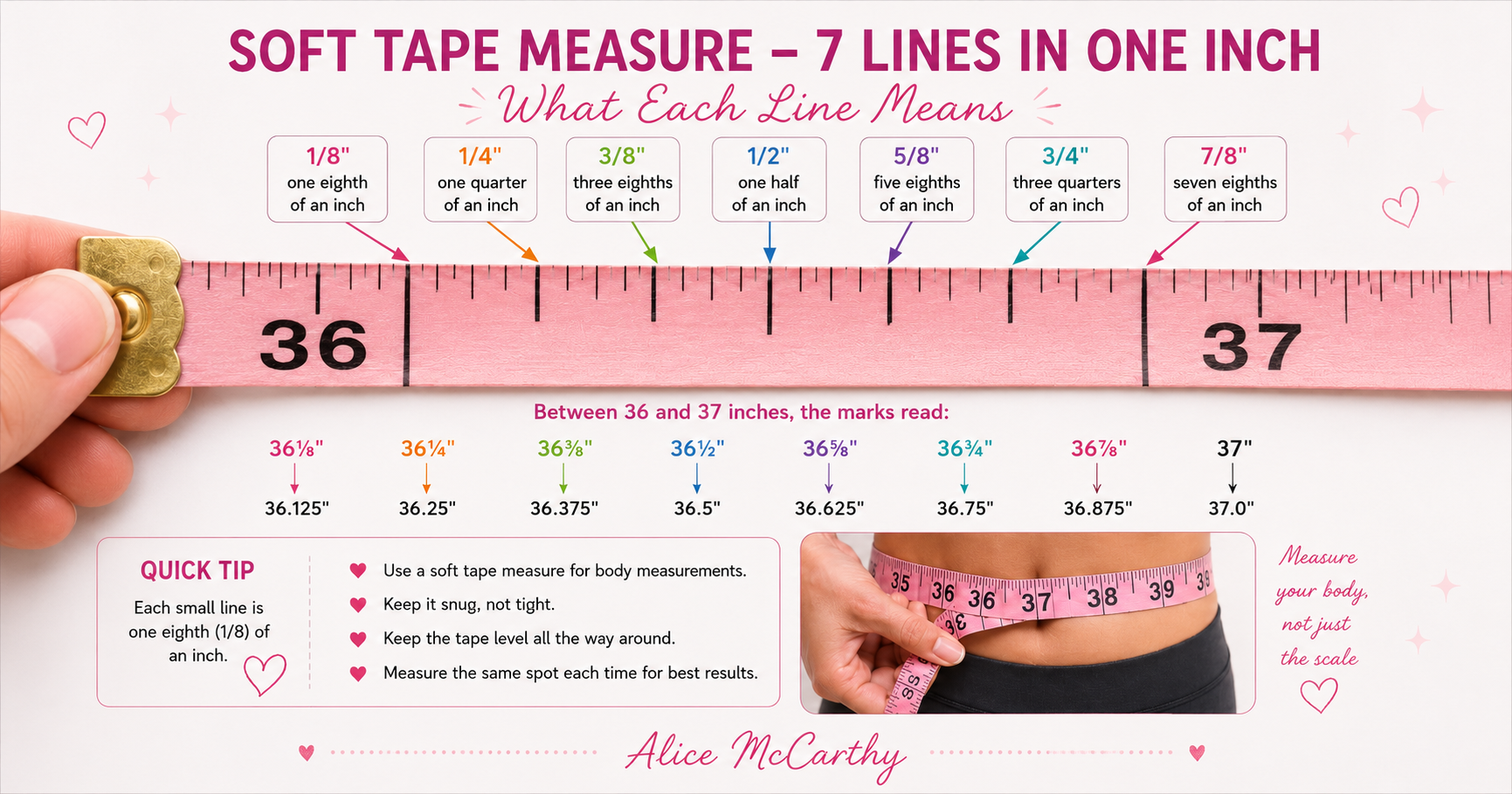
    Understanding the Lines on a Soft Measuring Tape

    Some soft measuring tapes have seven small lines between each whole inch. When that happens, the inch is divided into eighths.

    The marks are:

    1/8 inch

    1/4 inch

    3/8 inch

    1/2 inch

    5/8 inch

    3/4 inch

    7/8 inch

    Then you reach the next whole inch.

    For example, the lines between 36 and 37 inches would be:

    36 1/8

    36 1/4

    36 3/8

    36 1/2

    36 5/8

    36 3/4

    36 7/8

    Then 37 inches

    You do not need to become obsessed with every tiny fraction. Recording your measurement to the nearest quarter inch is often enough for a simple wellness check-in.

    Why Inches Matter

    Sometimes the scale barely changes while body measurements do.

    A smaller waist or belly measurement may show that your body is changing, even if your weight is moving slowly. Strength training can also change how your body looks and feels without creating a dramatic drop on the scale.

    This is why learning how to measure your body can be so encouraging.

    One number may tell you your weight. Measurements, clothing fit, strength, energy and daily habits help tell the rest of the story.

    Measurements Are Information, Not Judgment

    Your measurements are not a grade.

    They do not determine your worth, and they are not proof that you were “good” or “bad” that week.

    A result is simply information you can use.

    There is no need to punish yourself, skip meals or give up because a number was not what you hoped to see. Shame does not build lasting habits.

    Patience, consistency and honest reflection will take you much farther.

    Notice the Progress the Scale Cannot Measure

    Take a moment to look beyond your weight.

    Are your clothes fitting more comfortably?

    Perhaps you feel stronger when getting out of a chair or climbing stairs.

    Can you walk farther without feeling as tired?

    Maybe you are drinking more water or eating more protein.

    Daily movement could be becoming easier to maintain.

    You may also be keeping promises to yourself more often than you did before.

    Those are real wins.

    A healthier life is not built through one perfect weigh-in. It grows through small choices repeated over time.

    I shared more about recognizing progress beyond the scale in my post about [healthy progress after 50].

    I Will Not Let the Scale Control My Day

    Today, I looked at my results as information and nothing more.

    My progress did not begin with this morning’s number, and it will not end there.

    I am continuing forward because I know that quitting will not take me where I want to go.

    Slow progress still counts. Maintaining a healthy habit is a victory, and returning to your routine without shame shows growth.

    Learning to treat your body with patience matters too.

    You Do Not Have to Figure It Out Alone

    Maybe you are tired of starting over.

    Perhaps the scale has been controlling your mood, or you feel confused about what to eat and where to begin.

    You may even be praying for guidance while knowing you do not want another extreme diet, expensive shot or bottle of pills.

    I understand that feeling.

    What has helped me is a simple wellness approach built around real food, daily movement and habits that can fit into real life.

    A simple way of eating has helped me stay consistent, and I explain more in my post about [the low-glycemic lifestyle].

    I am not perfect, and I am not here to pressure anyone.

    My role is simply to share what I am learning and gently guide women who feel ready for a different approach.

    Sometimes we do not need another strict plan.

    We need encouragement, simple steps and someone to remind us that one number never tells the whole story.

    The scale is one tool. Inches are another.

    Still, your strength, energy, consistency and willingness to keep going may be the most meaningful measures of all.

    Today is weigh-in day.

    It is also another opportunity to choose your health without letting the scale choose your mood. 🦋

  • Healthy Progress After 50: Small Habits Matter

    Healthy Progress After 50: Small Habits Matter

    Healthy progress after 50 is not about doing everything perfectly or allowing one number on the scale to determine how you feel about yourself.

    It is about noticing the small habits that are helping you become stronger, healthier, and more consistent in your everyday life.

    Have you ever looked at your progress and immediately searched for what you did wrong?

    Maybe the scale did not move as quickly as you hoped.

    Or perhaps you missed a workout, did not drink enough water, or ate more of something than you planned.

    And just like that, you forget everything you did right.

    Women have been taught to judge a health journey by one number for far too long. But real progress is much bigger than the scale.

    It may look like:

    • Having more energy
    • Becoming stronger
    • Making better choices more often
    • Keeping a promise to yourself
    • Getting back on track without waiting for Monday
    • Learning what your body needs
    • Creating habits that fit your actual life

    That is progress too.

    What Healthy Progress After 50 Really Looks Like

    Today, I completed my two-week health check-in.

    I was down 3.3 pounds, and one of my stomach measurements was down two inches.

    However, some measurements changed, while others stayed the same.

    I also noticed that my energy was good. I consistently included protein with my meals, completed my 100 squats, did 30 wall push-ups, and held a one-minute wall plank.

    Was everything perfect?

    No.

    My water intake could be better, and I discovered that I may have become a little too friendly with cottage cheese.

    Still, this check-in was not a report card.

    It was information.

    Your results are information too.

    They are not proof that you failed. They are simply showing you what is working and where one small adjustment may help.

    Instead of asking:

    “Why am I not doing better?”

    Try asking:

    “What is my body and my routine teaching me?”

    That question creates growth instead of guilt.

    Your Results Are Information, Not a Report Card

    Of course, the scale is one tool, but it is not the only way to measure progress.

    Your measurements, energy, strength, sleep, hydration, mood, and daily choices all matter.

    For example, your clothes may fit differently even when the scale barely moves.

    Sometimes you become stronger before you become smaller.

    Sometimes the biggest win is that you are still showing up instead of giving up.

    That matters.

    You do not need to earn a perfect score on your health journey.

    You need to pay attention, learn, and keep moving forward.

    Small Habits Create Healthy Progress After 50

    We often overlook small habits because they do not feel dramatic enough.

    Drinking another glass of water does not feel exciting.

    Eating protein with your meals does not create an overnight transformation.

    Doing wall push-ups instead of a difficult gym workout may seem too simple.

    But those small choices are exactly how a healthier life is built.

    The habits that feel ordinary today may be the very habits that change your health over time.

    You do not need a routine that looks impressive online.

    You need one you can repeat.

    Ten minutes of movement you actually do is more powerful than a complicated workout plan you keep avoiding.

    A simple meal you can prepare regularly is more helpful than a perfect menu you cannot maintain.

    Healthy living does not have to take over your life.

    It should support your life.

    I have also shared more about how changing the way you see yourself can help you create healthy habits that actually stick.

    Why Progress After 50 May Look Different

    Our bodies change as we get older, and pretending they do not will not help us.

    That does not mean your health cannot improve.

    It means your approach may need more patience, strength work, protein, hydration, rest, and consistency.

    You may not bounce back the way you did at 25.

    Honestly, most of us do not want to live like we did at 25 anyway.

    This season is not about punishing your body into becoming smaller.

    It is about caring for your body so you can remain strong, active, confident, and present for the life you are living now.

    You are not too old to become stronger.

    You are not too far behind to begin again.

    And you have not ruined your progress because you had an imperfect day—or even an imperfect month.

    Choose One Healthy Adjustment, Not Ten

    After a check-in, it is tempting to change everything at once.

    Drink more water.

    Exercise longer.

    Remove more foods.

    Sleep eight hours.

    Walk every day.

    Meal prep every Sunday.

    That may sound productive, but it can quickly become overwhelming.

    Choose one adjustment.

    Maybe yours is:

    • Filling your water bottle before your morning coffee
    • Adding protein to your first meal
    • Walking for ten minutes after dinner
    • Doing push-ups against the wall or kitchen counter
    • Going to bed thirty minutes earlier
    • Preparing one simple meal before the week begins

    Let that one choice become normal before adding five more.

    A routine becomes sustainable when it feels like part of who you are—not another temporary plan you are forcing yourself to follow.

    Choosing simple protein options can also make everyday healthy eating feel less complicated.

    Your Next Step Does Not Need to Be Big

    Healthy progress after 50 rarely comes from one dramatic decision.

    It comes from the ordinary choices you repeat—drinking your water, eating enough protein, moving your body, resting when needed, and beginning again without shame.

    You do not have to completely transform your life this week.

    You only need to take the next honest step.

    Look at what you have done well.

    Notice what needs a little attention.

    Then choose one thing you are willing to repeat.

    Your progress does not have to be fast to be real.

    It does not have to be perfect to count.

    And you do not need to become a completely different woman.

    You are simply becoming a woman who takes care of herself—one ordinary, powerful choice at a time.

    That woman is already in you.

    Keep showing her who she is.

    Simple Tools That Can Help

    You do not need a house full of equipment to work on your health.

    A few simple tools can make it easier to track progress, drink more water, and add gentle strength training to your day.

    This post contains Amazon affiliate links. As an Amazon Associate, I earn from qualifying purchases at no extra cost to you.

    A Soft Body Measuring Tape

    The scale does not always tell the whole story.

    A soft measuring tape can help you track changes around your waist, hips, arms, chest, and legs. Sometimes your measurements change even when the number on the scale stays the same.

    Shop this soft body measuring tape on Amazon:
    https://amzn.to/4vPiDZY

    A Water Bottle You Will Actually Use

    Drinking more water sounds simple, but it is easy to forget when life gets busy.

    A reusable water bottle can help you see how much you are drinking throughout the day. Look for one that is easy to carry, easy to clean, and not too heavy when it is full.

    See this reusable water bottle on Amazon:
    https://amzn.to/4uwCPP3

    Light Hand Weights

    You do not need heavy weights to begin building strength.

    Light hand weights can be used for arm exercises, squats, standing movements, or short workouts at home.

    Begin with a weight you can control comfortably. You can gradually increase the weight as you become stronger.

    View these light hand weights on Amazon:
    https://amzn.to/4owi98H

    The best wellness tools are not always the fanciest ones.

    They are the ones that help you keep showing up.

  • ✨Why I Started Over With My Health After 50

    There comes a point where you stop trying to “start again”…
    and you just decide to start different.

    That’s where I am.

    I’m a woman over 50, a grandma, a wife, and someone who has spent years going up and down with my health, my weight, and my energy.

    Not perfectly. Not neatly. Just honestly.

    And I finally realized something:

    I don’t want another quick fix.
    I don’t want another cycle of starting over.
    I want something I can actually live with.


    🌿 What changed for me

    For a long time, I thought health meant strict rules.

    Eat less. Do more. Try harder. Start over Monday.

    But that cycle never lasted.

    What changed everything for me was this:

    I started focusing on simple daily habits instead of perfection.

    • Eating when I’m hungry
    • Choosing real, simple foods
    • Moving my body in ways that feel doable
    • Paying attention to how I actually live every day, not just “trying to be good”

    Nothing extreme. Just consistent.


    💚 What I’ve learned (the honest part)

    At this stage of life, it’s not about being perfect.

    It’s about:

    • feeling better in your own skin
    • having energy for your family
    • building strength, not restriction
    • and creating habits that actually fit your real life

    I also learned something deeper:

    If your environment, mindset, and daily habits don’t support you…
    it’s almost impossible to stay consistent.


    🤍 Why I’m sharing this

    I started this blog because I know I’m not the only one.

    There are so many women over 50 who:

    • feel like they’ve tried everything
    • feel stuck in cycles of losing and gaining
    • wonder if it’s too late to feel good again

    It’s not too late.

    It just needs to be simpler.


    🌿 What this space is going to be

    This blog is going to be a place for:

    • real wellness after 50
    • simple health habits
    • mindset shifts that actually stick
    • clean living ideas
    • and honest conversations about what works in real life

    No pressure. No perfection.

    Just progress.


    💚 One final thought

    I’m not here starting over.

    I’m here starting smarter.

    And I’m taking it one simple day at a time.


    If you’re here reading this…
    maybe you’re in your own “something needs to change” moment too.

    You’re not alone.


    🤍 More coming soon.